Using Whimsical Design to Bring Personality, the Unexpected, and Joy into your Home
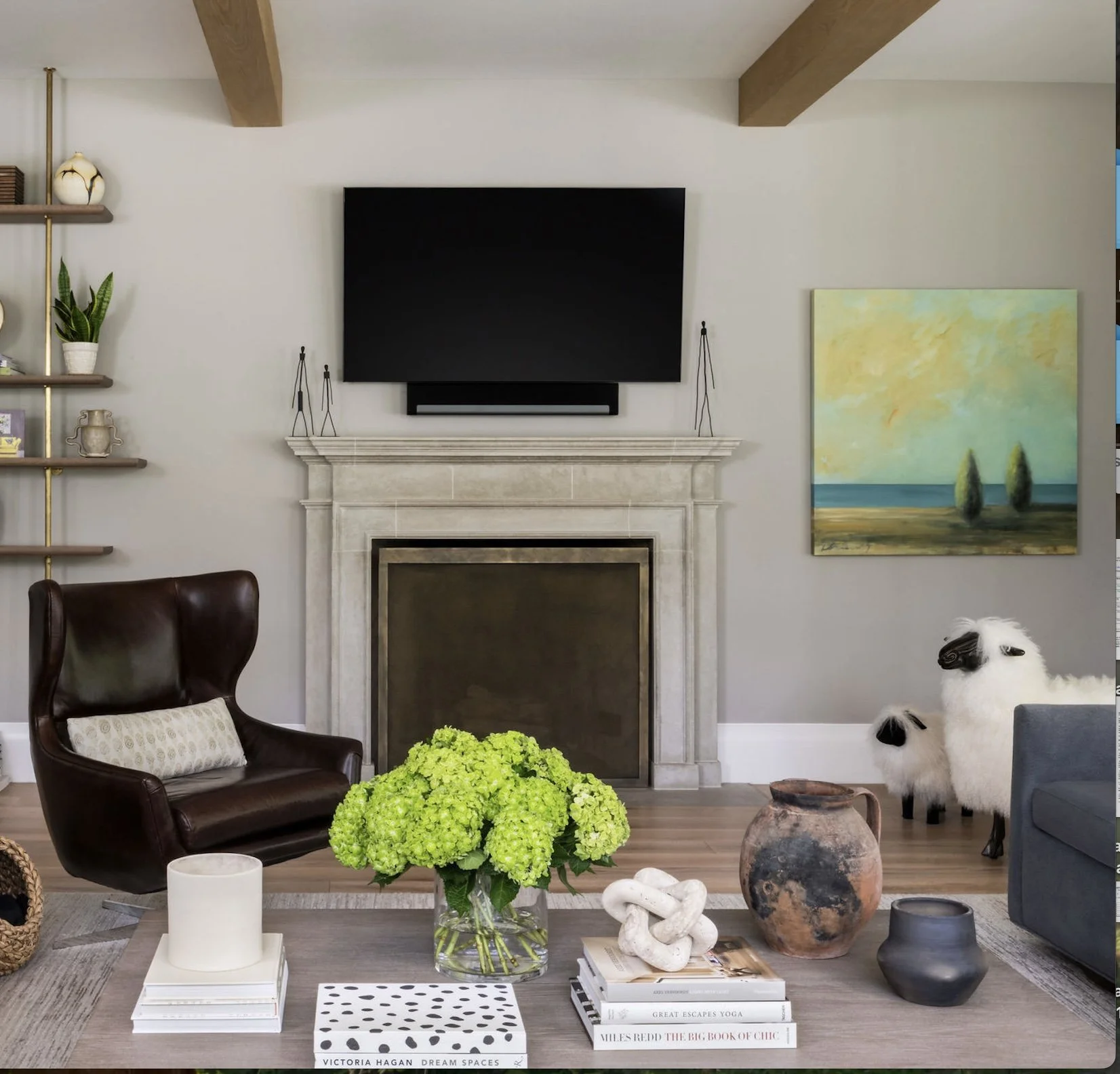
A pair of sheep stools stand at attention surveying the living room.
Photo Credit: Robert Radifera for Stylish Productions
Summary
Whimsical design has been around for hundreds of years, from Rococo period to Art Nouveau and the more recent Memphis Design Style of the 1980s.
It’s also a playful, personal, and unexpected style that's gaining popularity.
It uses unique details to bring a sense of lightheartedness and humor to a space.
Key elements of whimsical design include bold colors and eye-catching patterns, unique furnishings, designs that tell stories and tie back to your personal aesthetic, and quirky accessories.
Anyone can incorporate this style into their home, even beginning with smaller touches like pillows, lamps, art and wallpaper.
Initial experimentation can begin in smaller areas of the home like hallways, mudrooms and powder rooms.
Designer Kit Kemp and her whimsical creations are featured in this blog.
Homes should be our happy place. We often look for ways to reinforce this, through everything from lighting, color and materials, to who we welcome. Whimsical design is another element. It’s the secret ingredient that turns function into fun. While it goes back centuries, its popularity spiked in the last few years as home owners look for opportunities to add more personality and create a more joyful environment in their homes.
What is Whimsical Design?
Whimsical: things that are unusual in a playful or amusing way.
- Britannica Dictionary
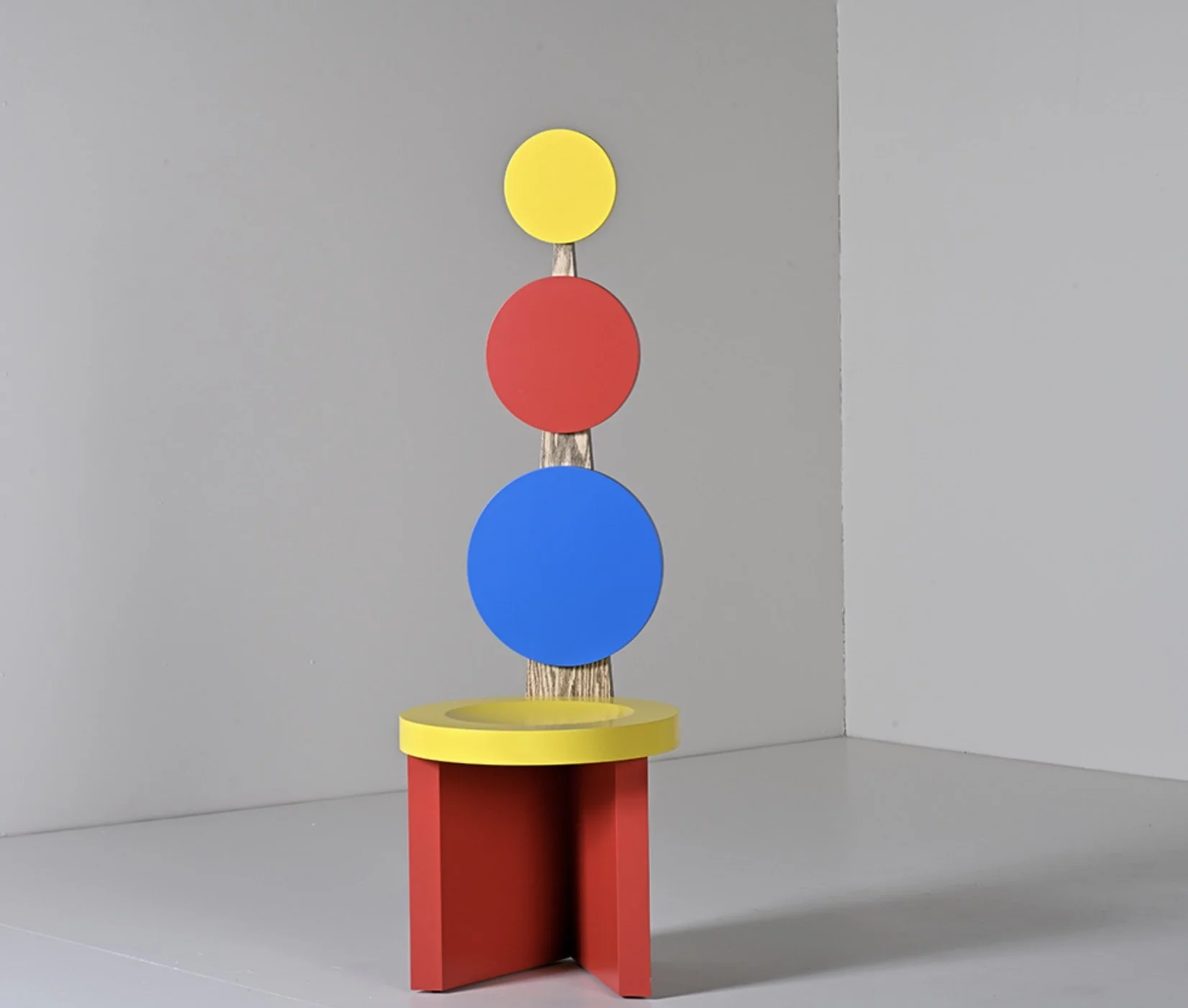
Abner Henry’s “Gloria Side Chair,” with its unconventional form and bold colors takes its inspiration from post-modern design.
Photo credit: Abner Henry
Whimsical interior design goes back hundreds of years, from the Rococo period to the Victorian era, Art Nouveau, and more recently Post-Modernism. The Memphis Group is one of the most famous examples of Post-Modern design with their bold geometric and colorful creations that set off a huge trend that went beyond interior design and into other areas like fashion.
Architectural Digest describes whimsical design as, “a playful, personal, and unexpected style that uses unique details to bring a sense of lightheartedness and humor to a space. It involves a mix of traditional and modern elements with unique colors, unexpected patterns, and quirky objects…”
Whimsical design key elements include bold colors and eye-catching patterns, unique furnishings, designs that tell stories and tie back to your personal aesthetic, and quirky accessories.
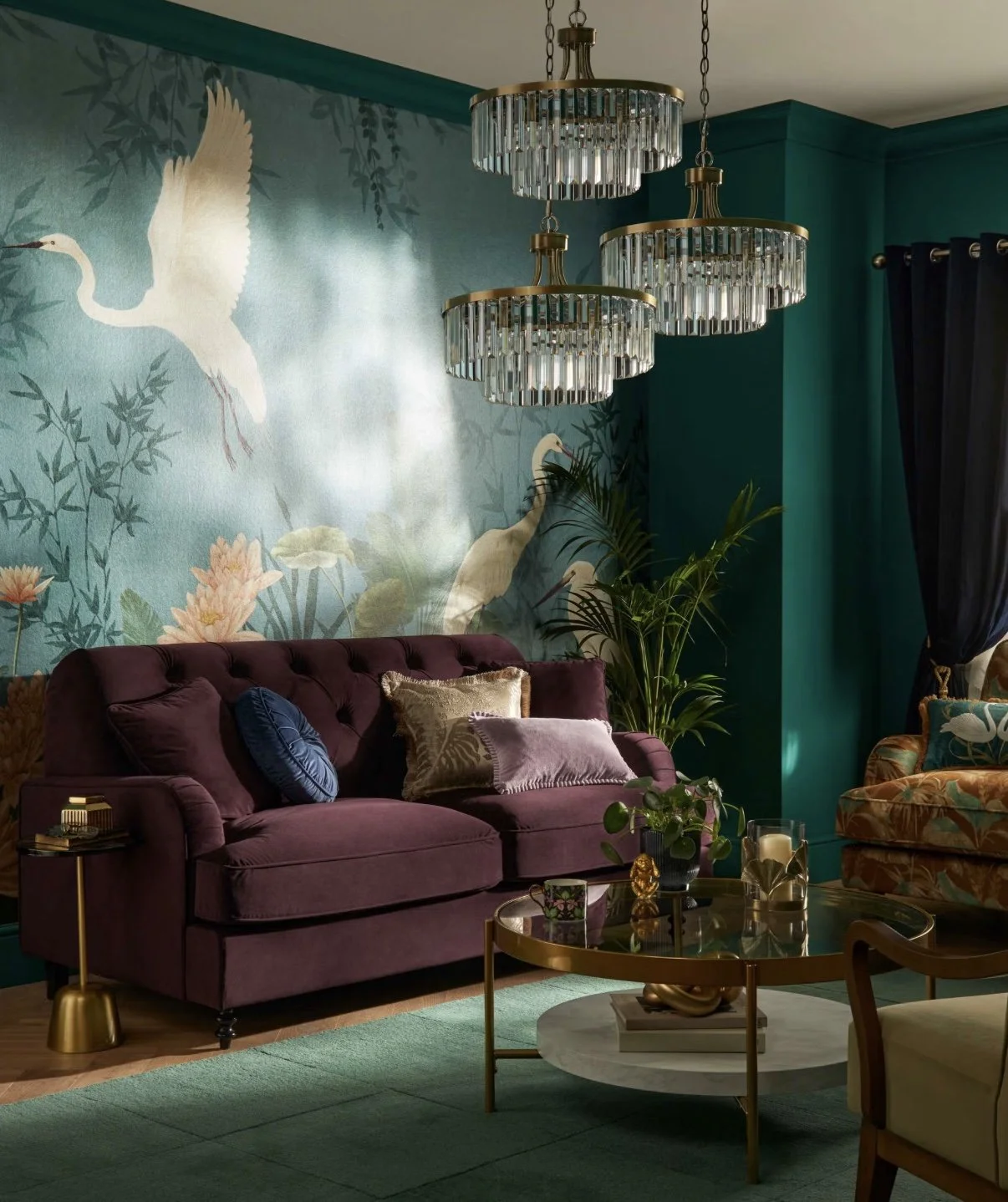
A modern interpretation of Art Nouveau style, which is often nature-infused.
Photo credit: House Beautiful
Whimsical design can be achieved by doing something unexpected. It surprises and delights the viewer and helps to make a home not only unique, but also more warm and welcoming. Whimsical design also adds personality to your home and allows you to create focal points in the room. Remember though, it can’t be done in a way that sacrifices function.
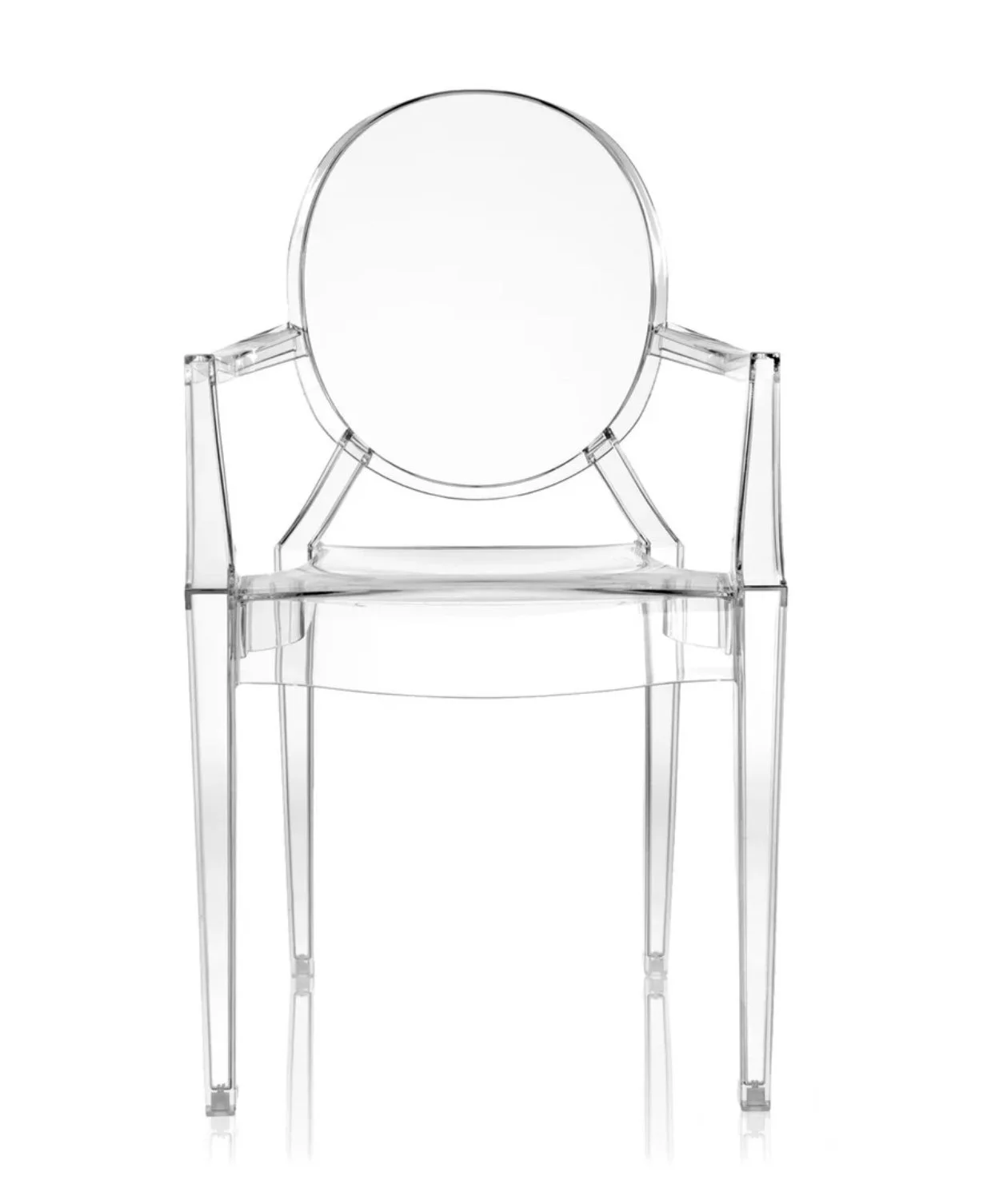
The Kartell Louis Ghost Chair, Designed by Philippe Stark
Photo credit: Italian Luxury Interiors
Where to Begin
Take the plunge. Whimsical design is about taking risks. Some of these designer risks can be so appreciated that they later become part of the norm and copies are mass produced, like the Phillip Stark Ghost Chair.
If you want to start by dipping in a toe first, remember, it can be dialed up or down, depending on your level of comfort. For us at Casa Millie, collaboration is key. We like to work with you to understand your passions and interests. By going through this exercise, we can unlock unexpected and fun opportunities for whimsy that authentically tie back to you.
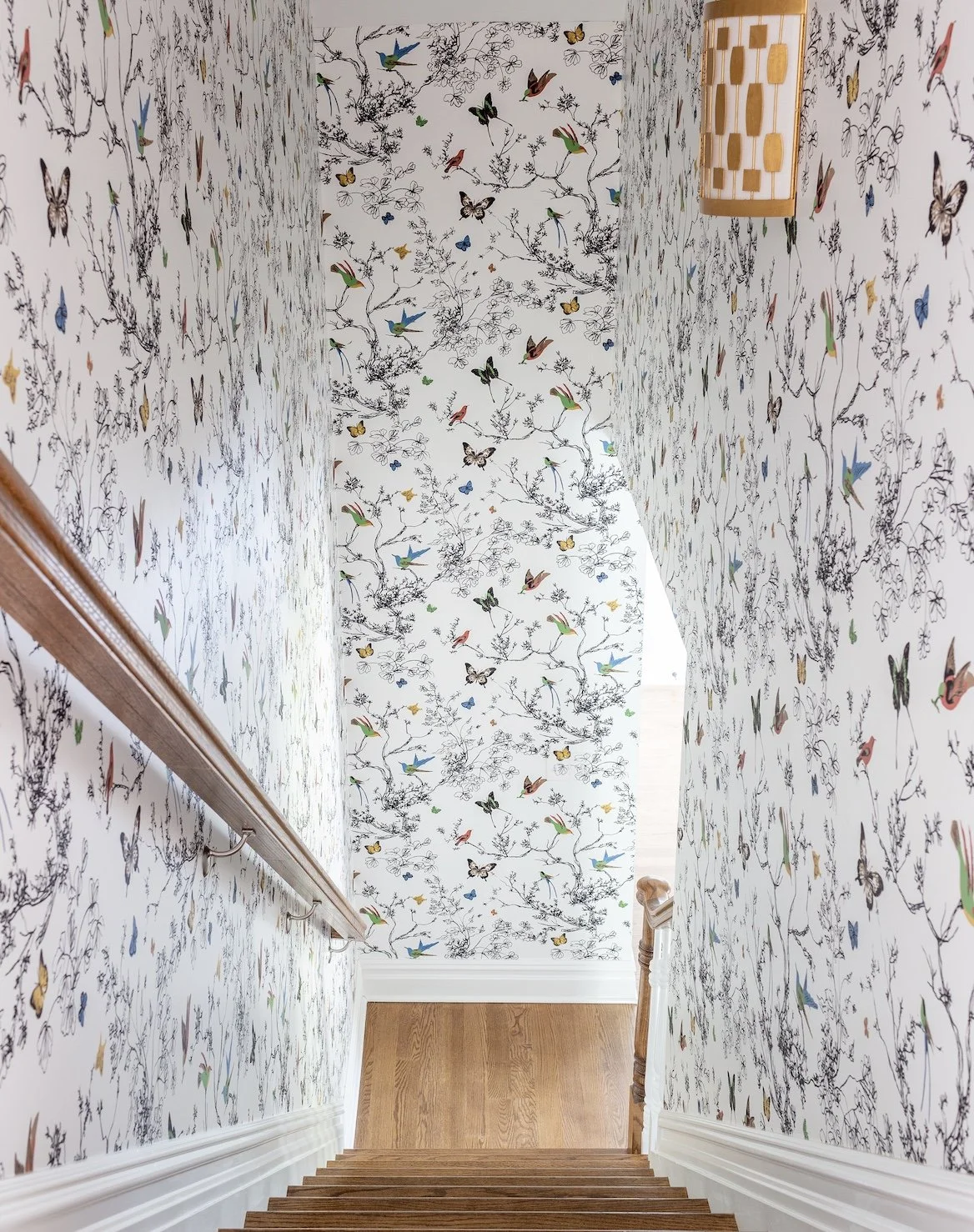
A Schumacher wallpaper blankets this stairway and creates a lighter moment.
Photo Credit: Robert Radifera for Stylish Productions
You can start to experiment with safer spaces like a hallway, powder room, or mud room, where a bold color, accessory, or unexpected wallpaper makes a huge impact. This leap, whether small or large, adds character to these functional spaces, too.
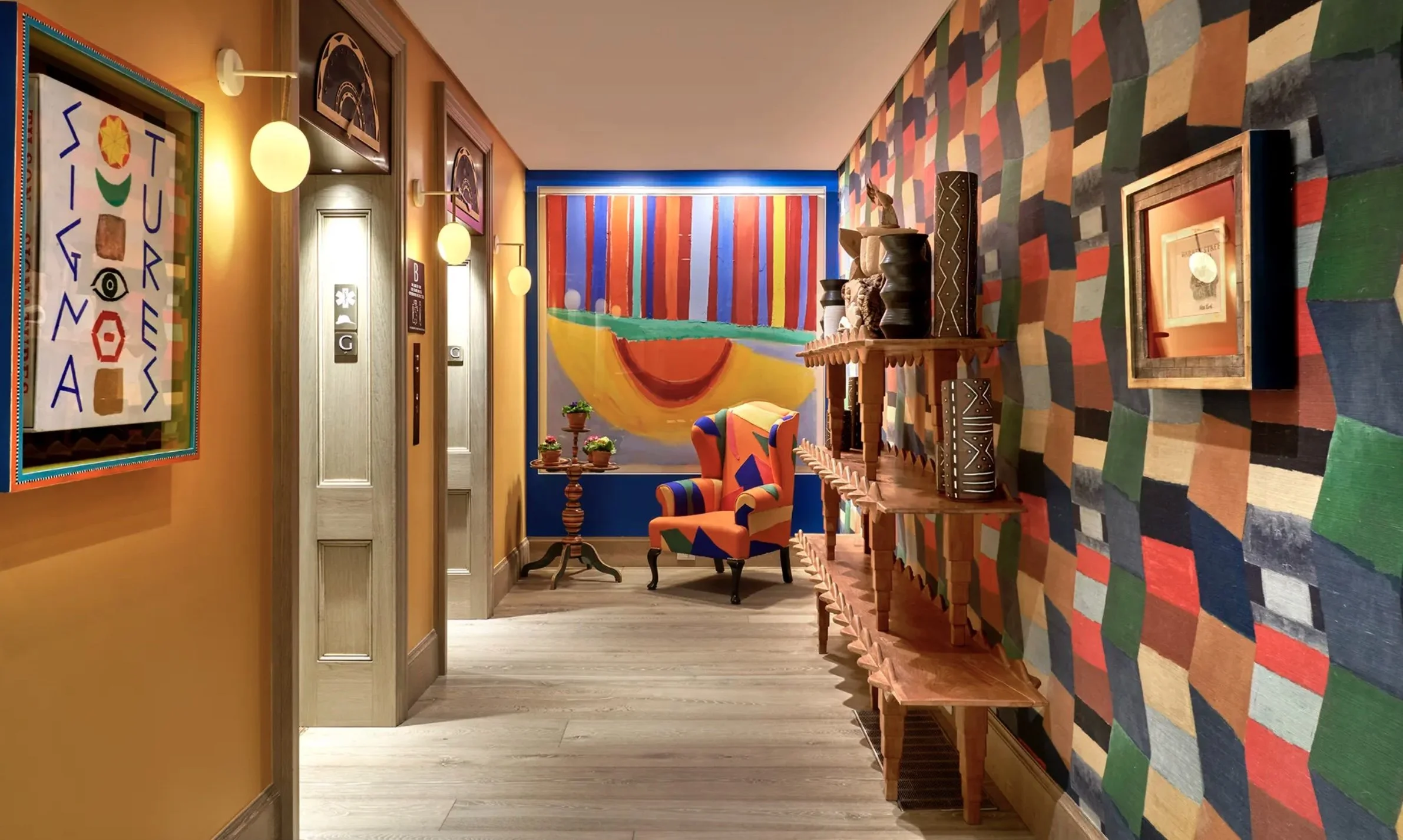
This Kit Kemp Design Studio bookshelf, with its organic shape (far right), is one of many whimsical moments in this space that caught my eye.
Photo credit: Kit Kemp Design Studio
Kit Kemp and Whimsical Design
I recently met U.K.-based designer Kit Kemp in New York. I have loved sourcing from her and following her work. She is passionate about “creating exciting and unique interiors.” Her design studio focuses on textiles, fragrances, and homewares, and she is an author and highly-respected champion of British art, craft, and sculpture. Her design studio is also “celebrated for its individual and original approach to hotel and residential design, with colourful and detailed storytelling which celebrates craft and captures the imagination.”
Kit takes whimsical to another level and it works. Her creations spark conversation and feature vibrant colors, patterns and materials. She puts them together like puzzle pieces. Some people might look at Kit’s - or other designers’ whimsical objects (or design approach) - and think they’re strange, but then think, “wait, there is something I love about it.” I find Kit’s use of whimsy in her spaces so inspirational.
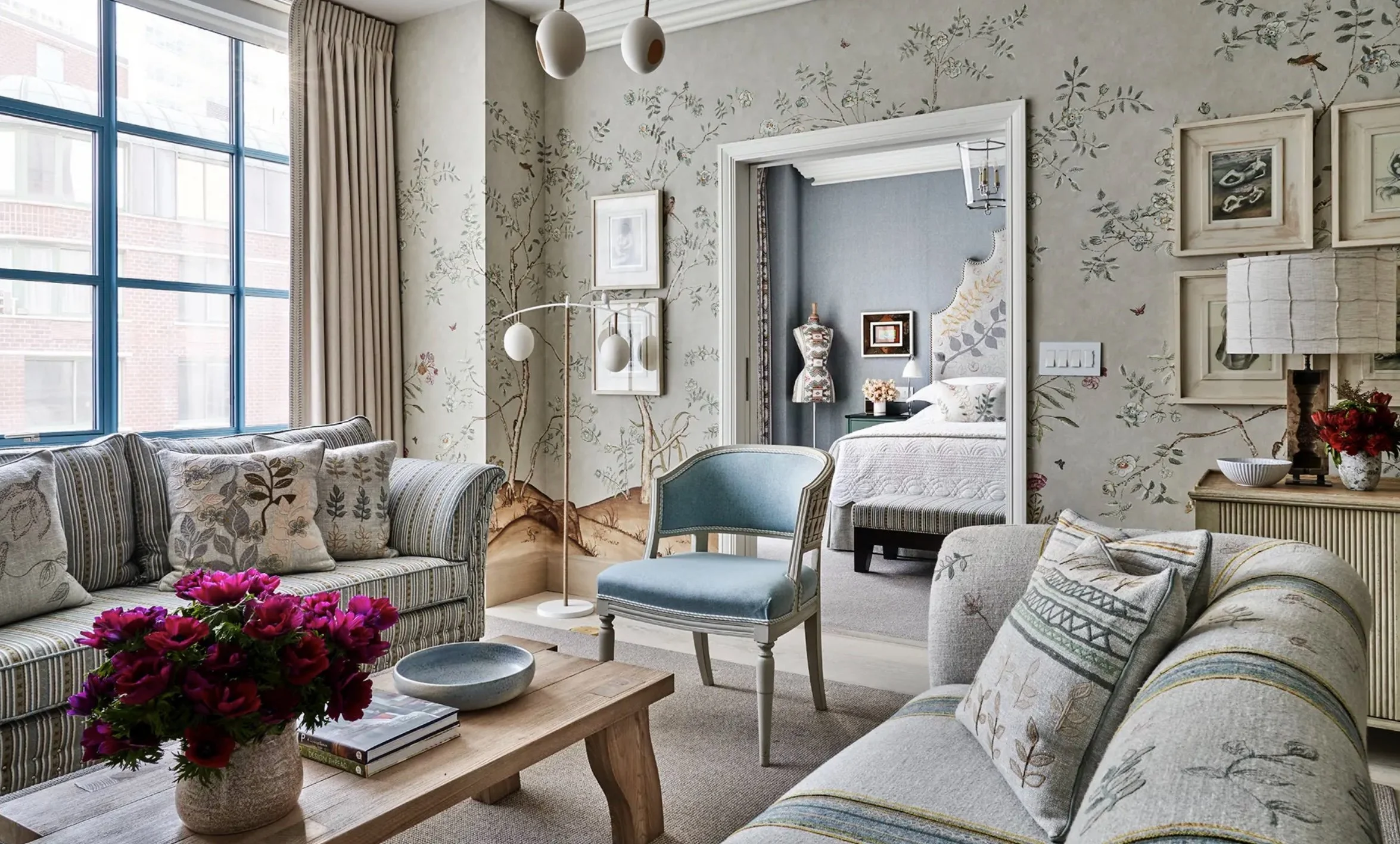
Notice how Kit Kemp is pattern mixing here in this Warren Street Hotel design. It’s pattern pattern everywhere, and it works.
Photo credit: Kit Kemp Design Studio
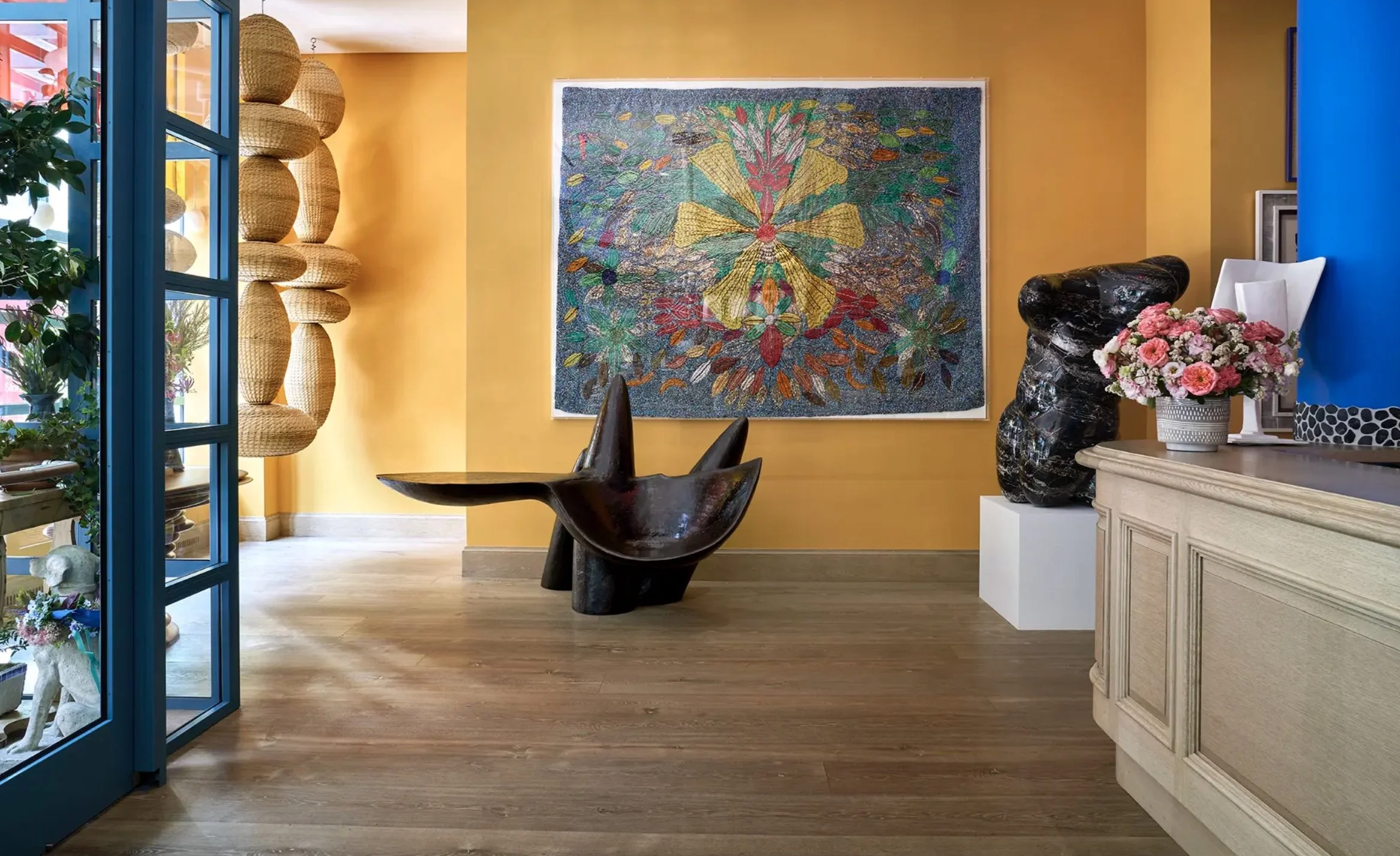
A Kit Kemp Design Studio wood chair in the distance, in an unusual but comfortable shape (we tested it!)
Photo credit: Kit Kemp Design Studio
How I Use Whimsical Design
We don’t have to go to the extent that Kit Kemp does in our project designs. Maybe you don’t want that level of pattern and color in your home, because it feels overwhelming to you, but you can add it to the point that you are comfortable. This is where conversation and collaboration is key when we work with our clients to discover the opportunities.
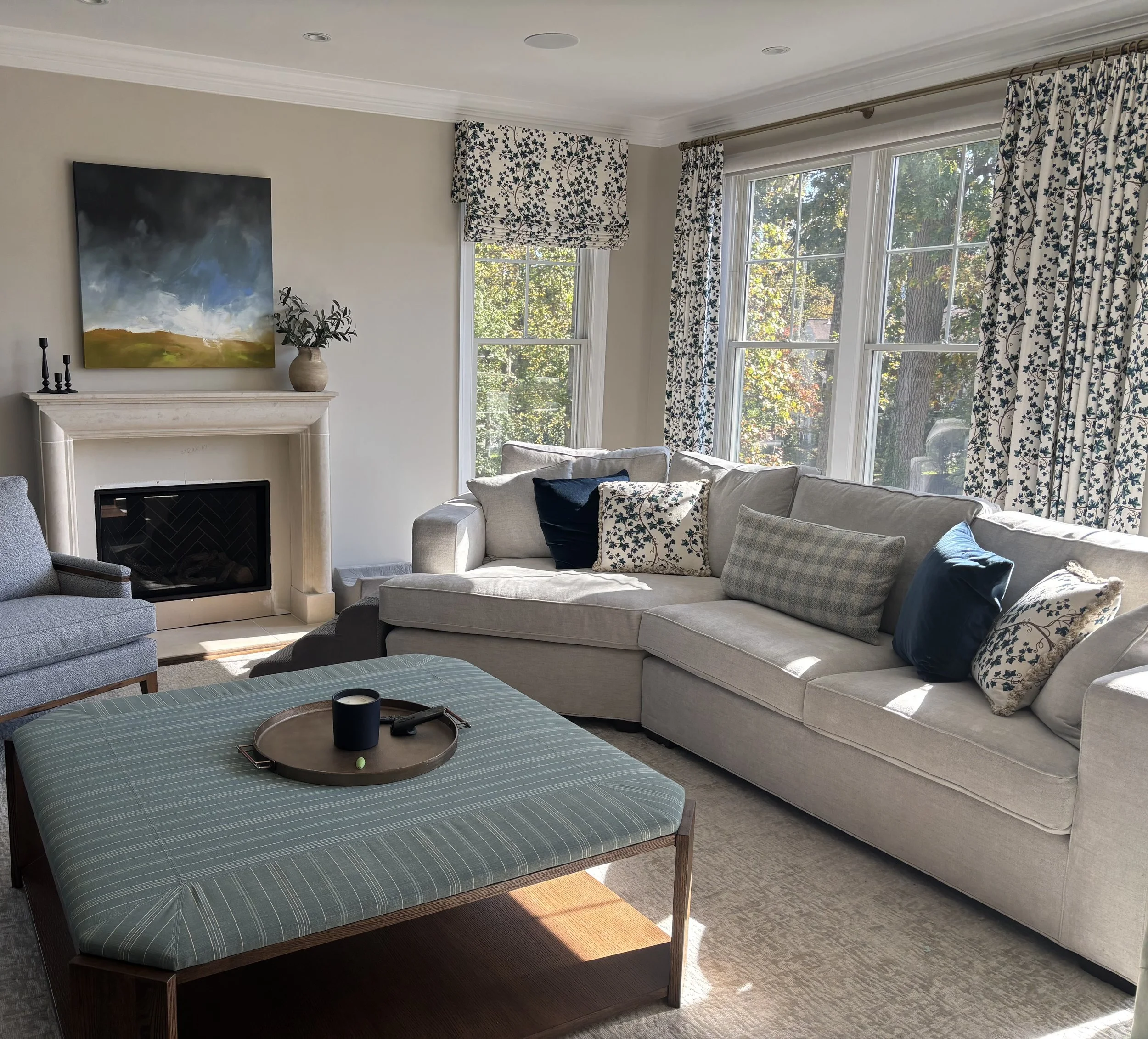
This Vienna, Virginia, living room is almost complete. Meantime, the James Malone patterned drapery stands out, providing nature-inspired whimsy and a focal point.
Photo credit: Niki Zoli
While I’m more naturally drawn to soft, neutral texture spaces, I also like to incorporate a bit of the unexpected and whimsy in my design. These are things that energize the spaces we create.
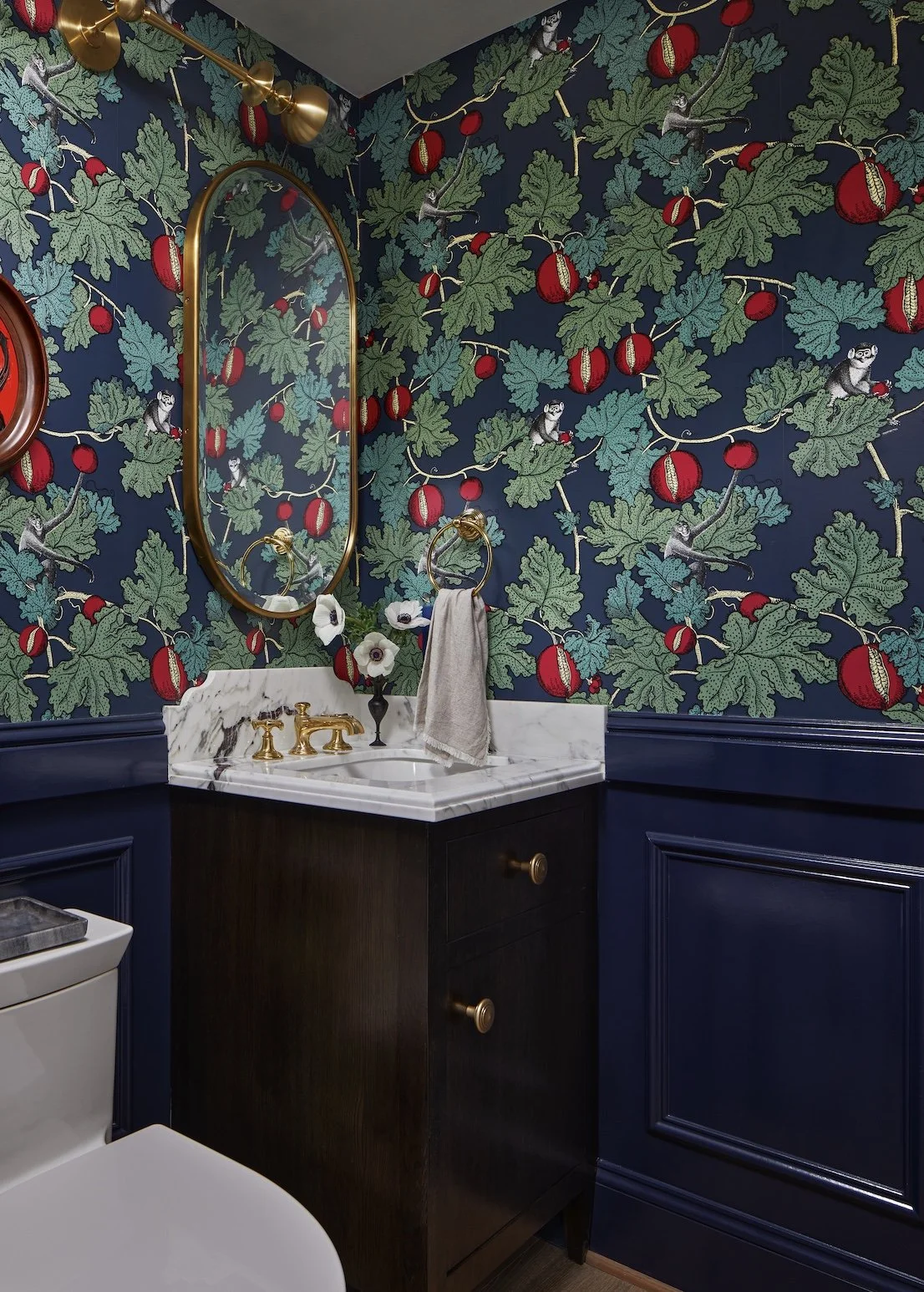
This powder room's playful Cole and Sons “Frutto Probito” wallpaper sharply contrasts rich reds, blues and greens and adds whimsy to the space.
Photo credit: East and Lane
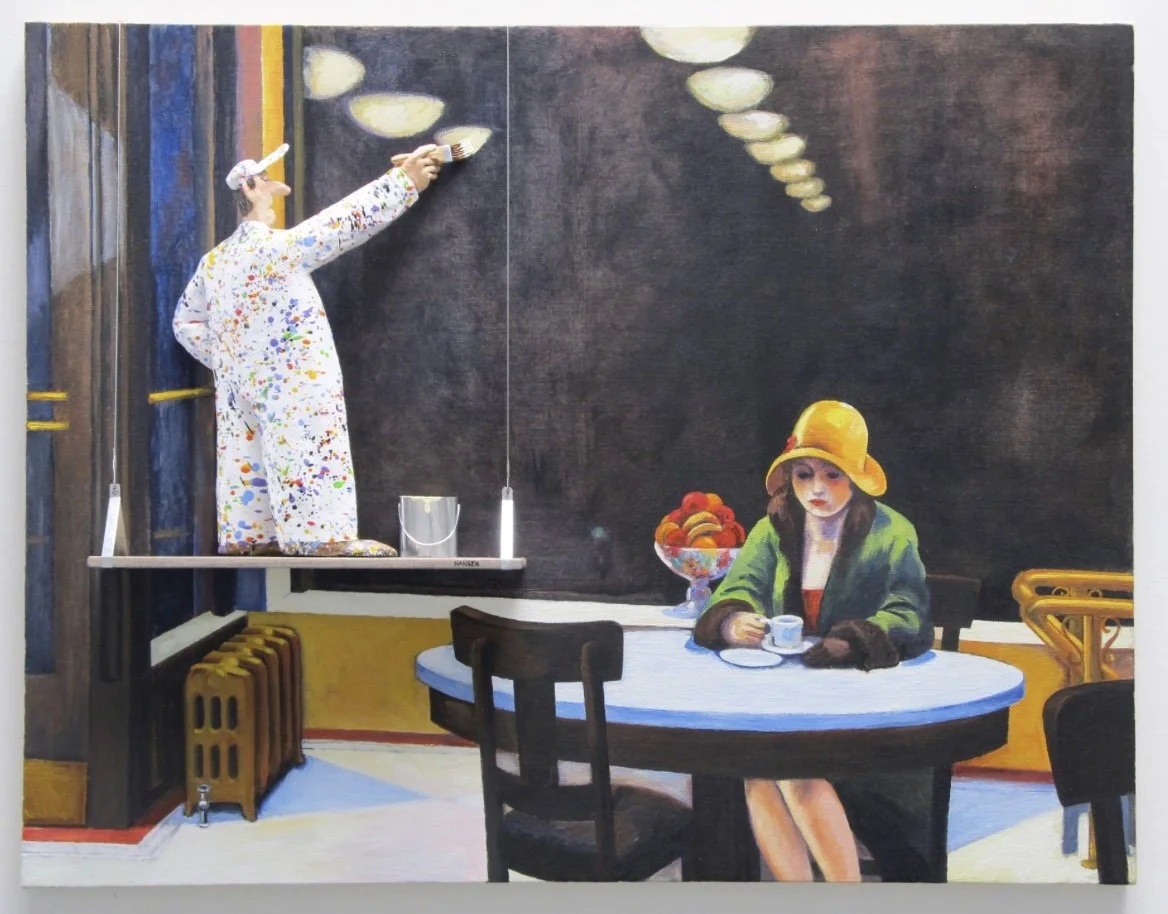
A humorous Stephen Hansen mixed media artwork entitled “Automat” (inspired by Edward Hopper’s famous oil painting), which I have in my home.
Photo credit: Studio E Gallery
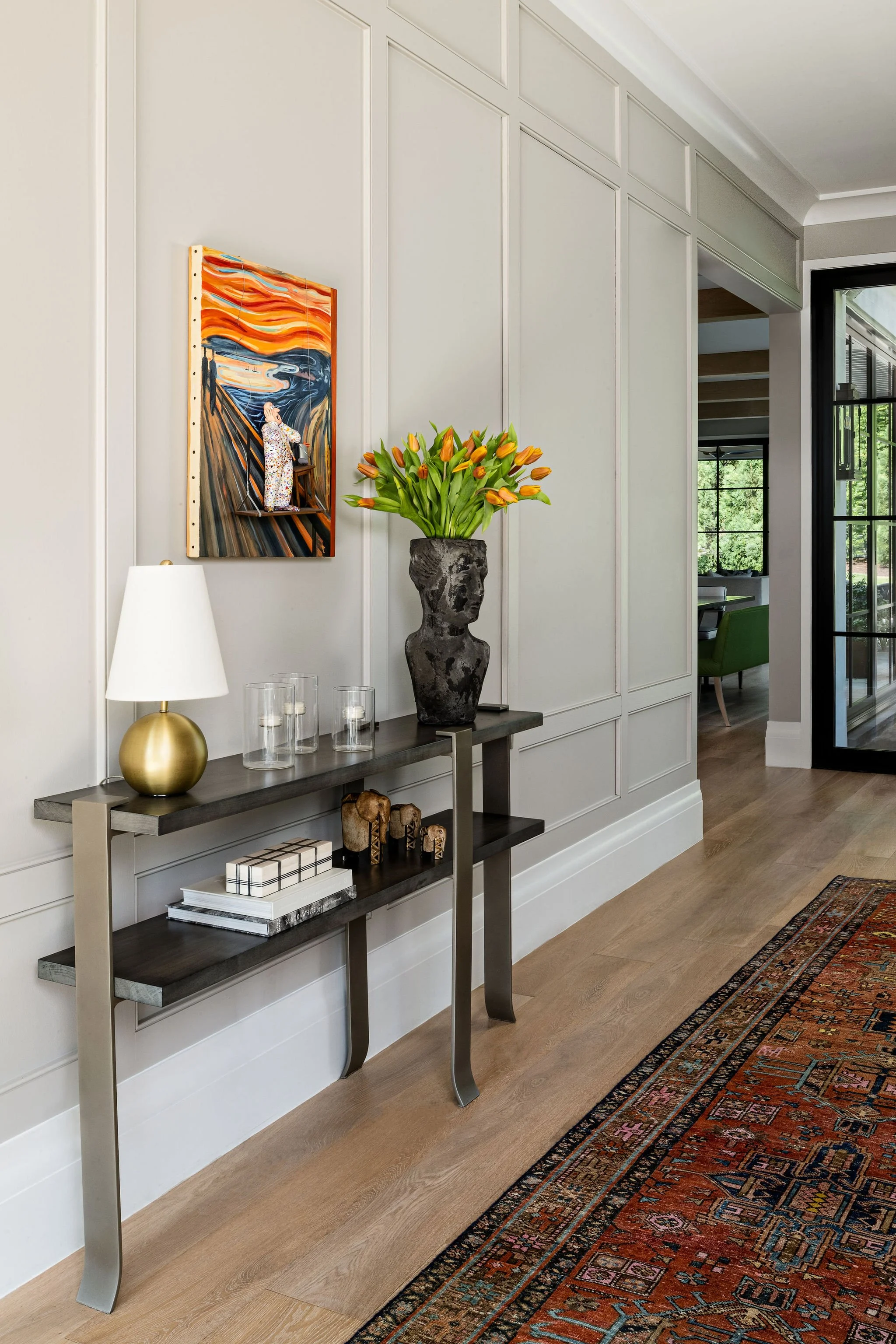
A head shaped vase - a thrift store find - with a Stephen Hansen artwork on the wall nearby.
Photo Credit: Robert Radifera for Stylish Productions
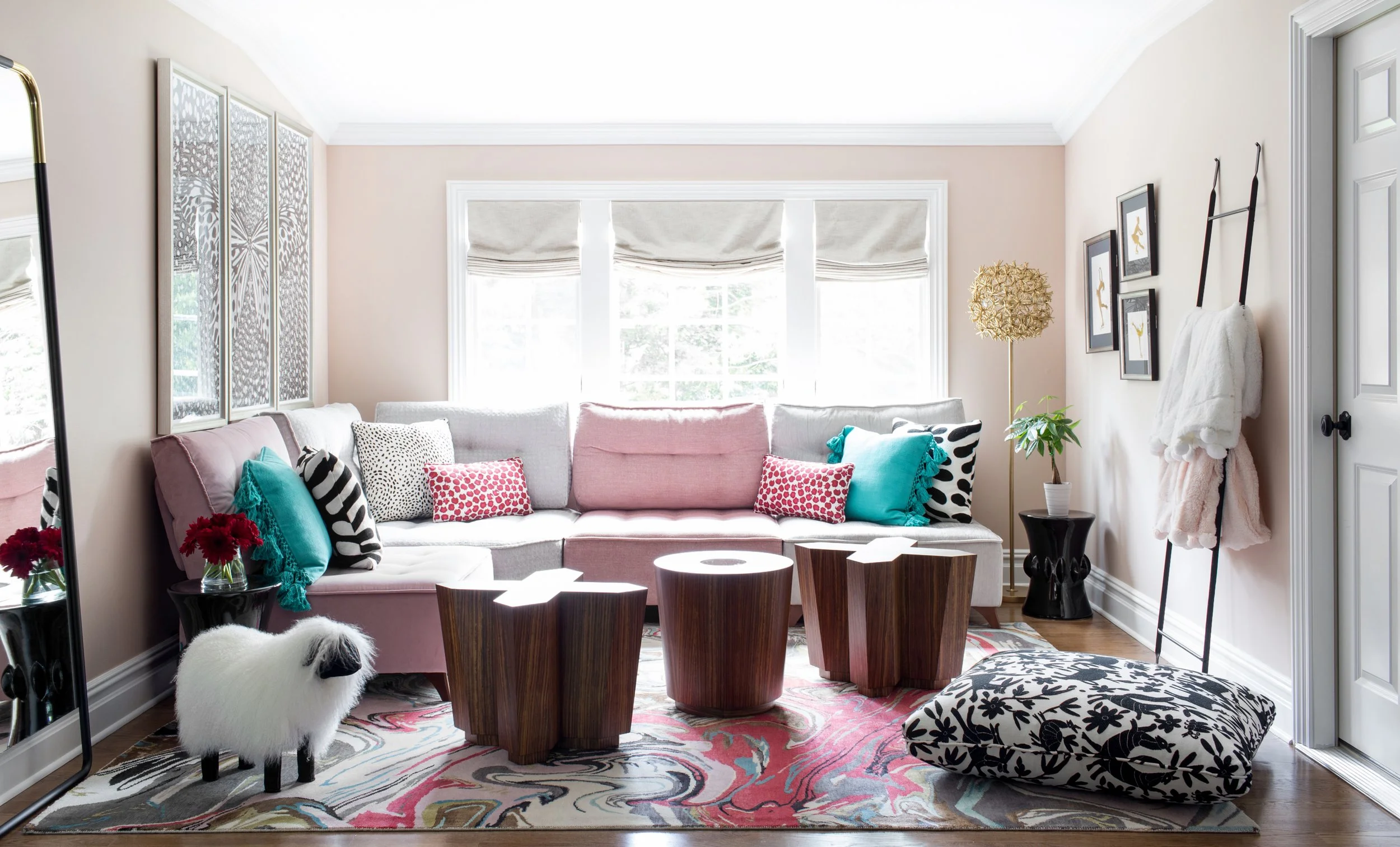
Tic-Tac-Toe Tables add a playful feel to this boldly patterned room designed for the owners’ children.
Photo Credit: Robert Radifera for Stylish Productions
Whimsy is the cousin to maximalism. If you go too far, it can feel overwhelming for some. But if you want to start with just one or two elements, and “micro dose” beginning with anything from cushions, glassware, coat hooks, frames, wall art, chairs to lamps or quirky pottery, you still get the conversation piece and the happiness in your tummy.
We can help you get started, and find that perfect balance of whimsy that works for you. We are only a phone call away and look forward to hearing from you!
Until next time!