Four Design Principles You Need to Know, and Their Overlap with My Other Passion: Yoga
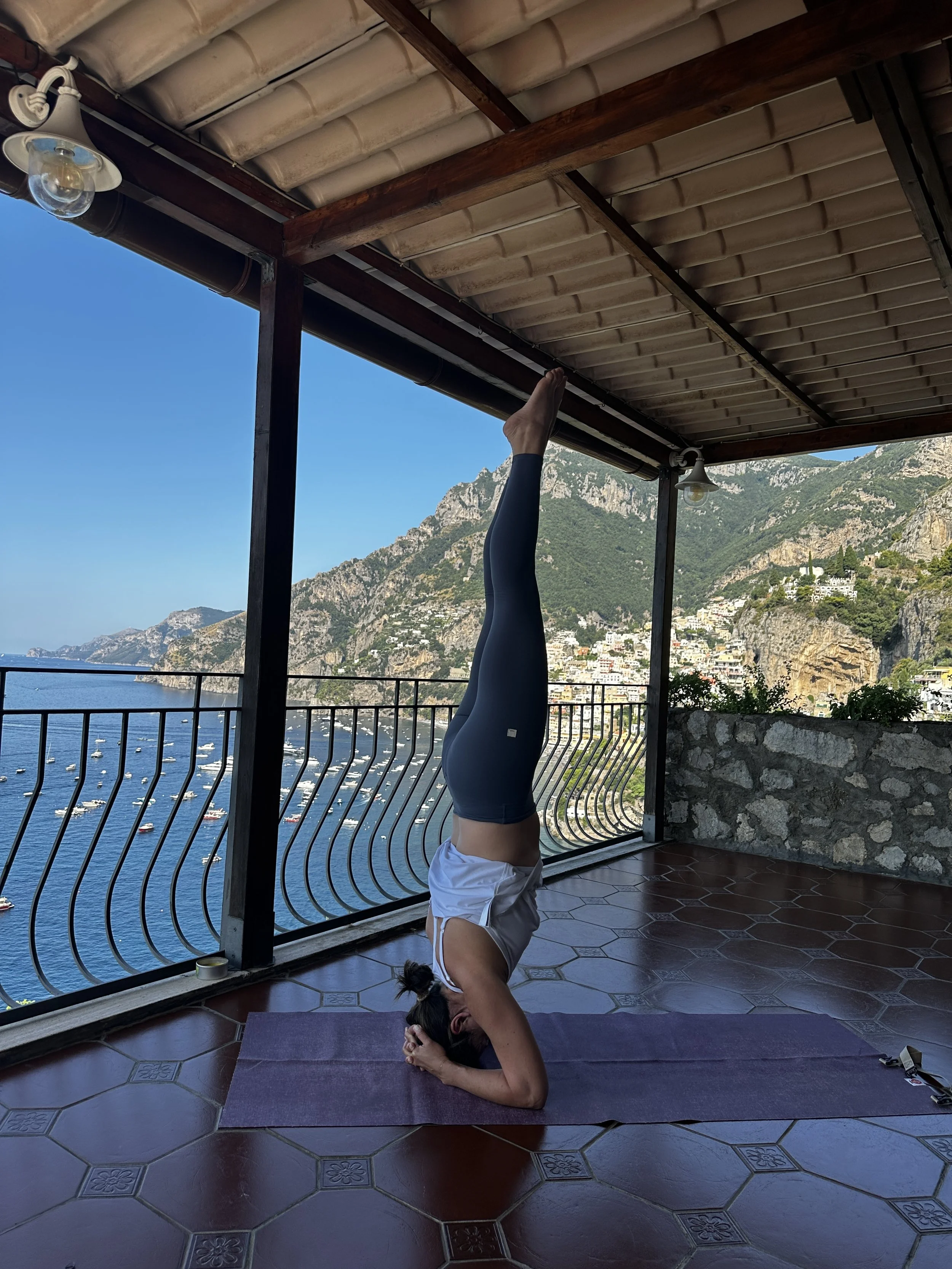
Me, sneaking in a bit of yoga during a trip to Italy last summer with family and friends.
Summary
Yoga and interior design are central to my life.
They share a number of key principles and elements, including four that are featured in this blog: alignment, flow, focus and balance.
Each of these elements is described in the context of yoga and interior design, and how we can use this to create beautiful, functional spaces.
Yoga’s principles have helped to reinforce and energize our interior design work at Casa Millie.
Yoga is central to my life here in Northern Virginia given all the physical and mental benefits it brings, ranging from balance to clarity. As I’ve continued to deepen my practice, I’ve noticed how yoga subtly reinforces my design aesthetic, creativity, and principles. While there are a number of elements tied to both yoga and interior design, some of the most critical components that bridge the gap between these two distinct worlds include alignment, flow, focus, and balance.
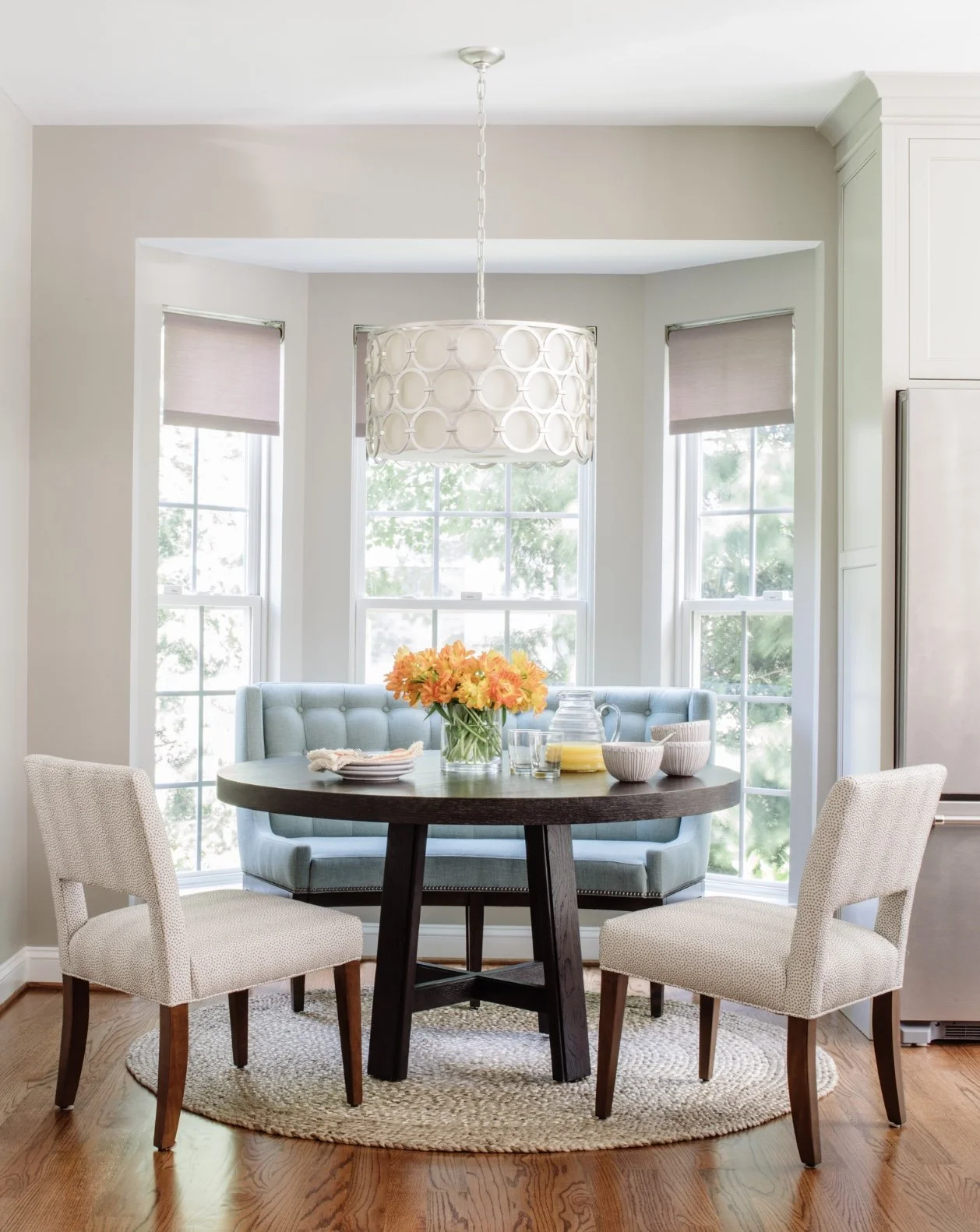
The room’s focal point - a Vanguard Furniture bench in a soft teal - aligns with the center line of the middle window behind this breakfast nook, helping to create balance and ease in this sunny space.
Photo credit: Robert Radifera for Stylish Productions
Alignment
Alignment helps to bring a feeling of ease and a sense of order. It ensures everything is beautifully, and structurally, set in its rightful place. To put it simply, when creating alignment within a room, you are zooming in on elements such as artwork, furniture, a light fixture or even a carpet and ensuring they line up along their centerlines or edges to help create this sense of balance.
U.K.-based interior designer Kit Kemp also wrote a very interesting blog about alignment. She dug into center alignment and edge alignment in particular (when compositions are either to the left or right), sharing examples that visual learners will especially appreciate. If you want to learn even more about this key interior design principle, you can read her blog, “Line Up! Our Alignment Secrets” here.
“…Alignment is an interior design principle used to achieve a cohesive sense of balance within a space. To create an aligned scheme, it’s important to consider the relationship between all elements within a space..."
— Kit Kemp
In yoga, proper alignment is just as important. It ensures stability (which also brings a sense of ease), allows you to realize the full potential of a pose, and helps prevent injury. Even a few millimeters of adjustment can make all the difference, and you feel it, too! It also helps to ensure that energy is distributed evenly and helps to set the stage for flow. In interior design, alignment can help to guide the physical and visual energy that moves through the space. We’ll talk about flow next.
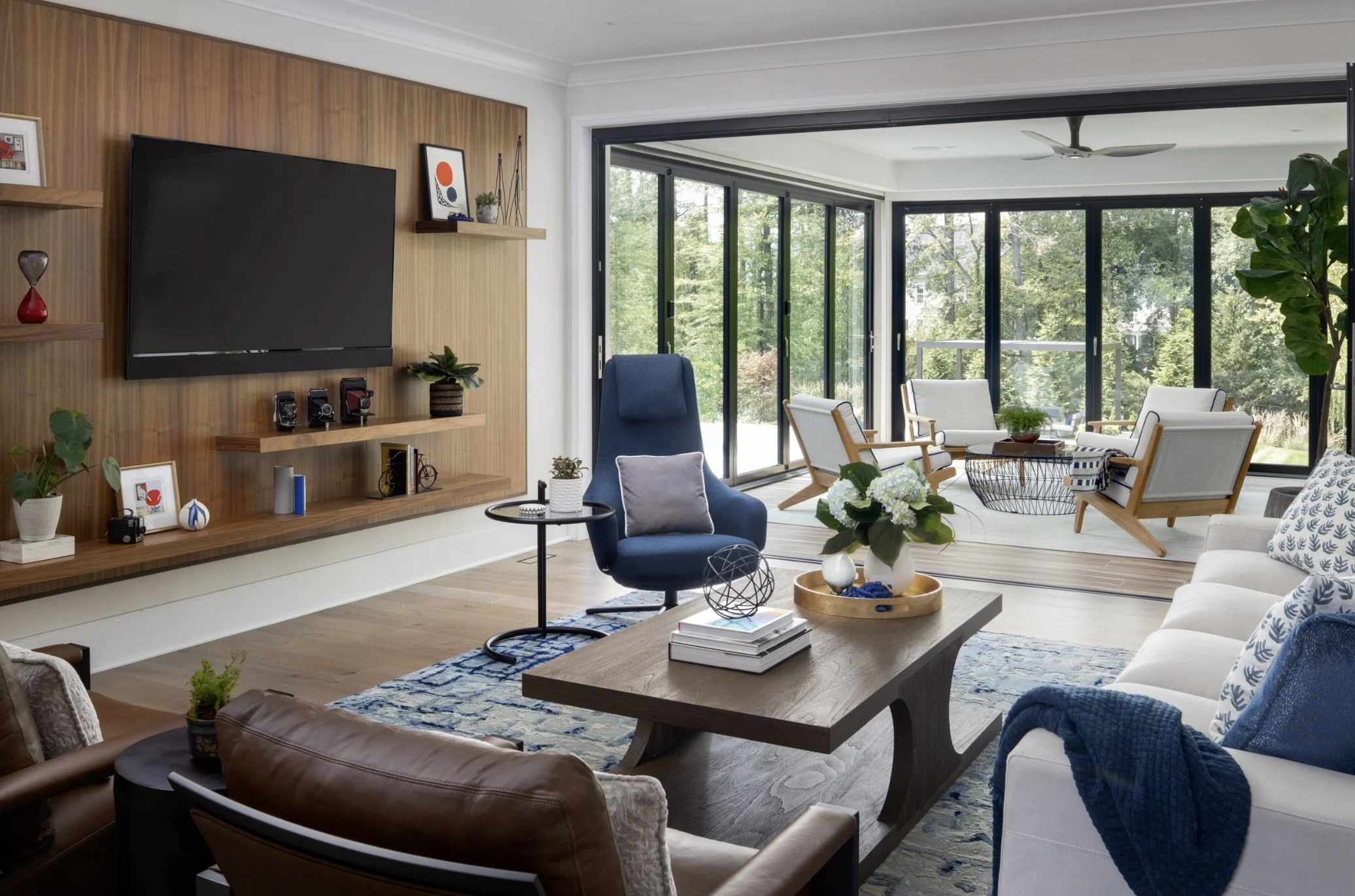
The “flow” in this room creates areas of transition and blank space between the living area and the sun room, allowing our sight line to carry through to the expansive windows and views of the outdoors.
Photo credit: Jenn Verrier Photography
Flow
Every room needs white space, also known as “negative” space, in order to breathe. Before I begin a design project, I study how a space will be used. I mentally map out the traffic (physical flow) and the sightlines (visual flow) to help ensure a plan that makes natural movement easy.
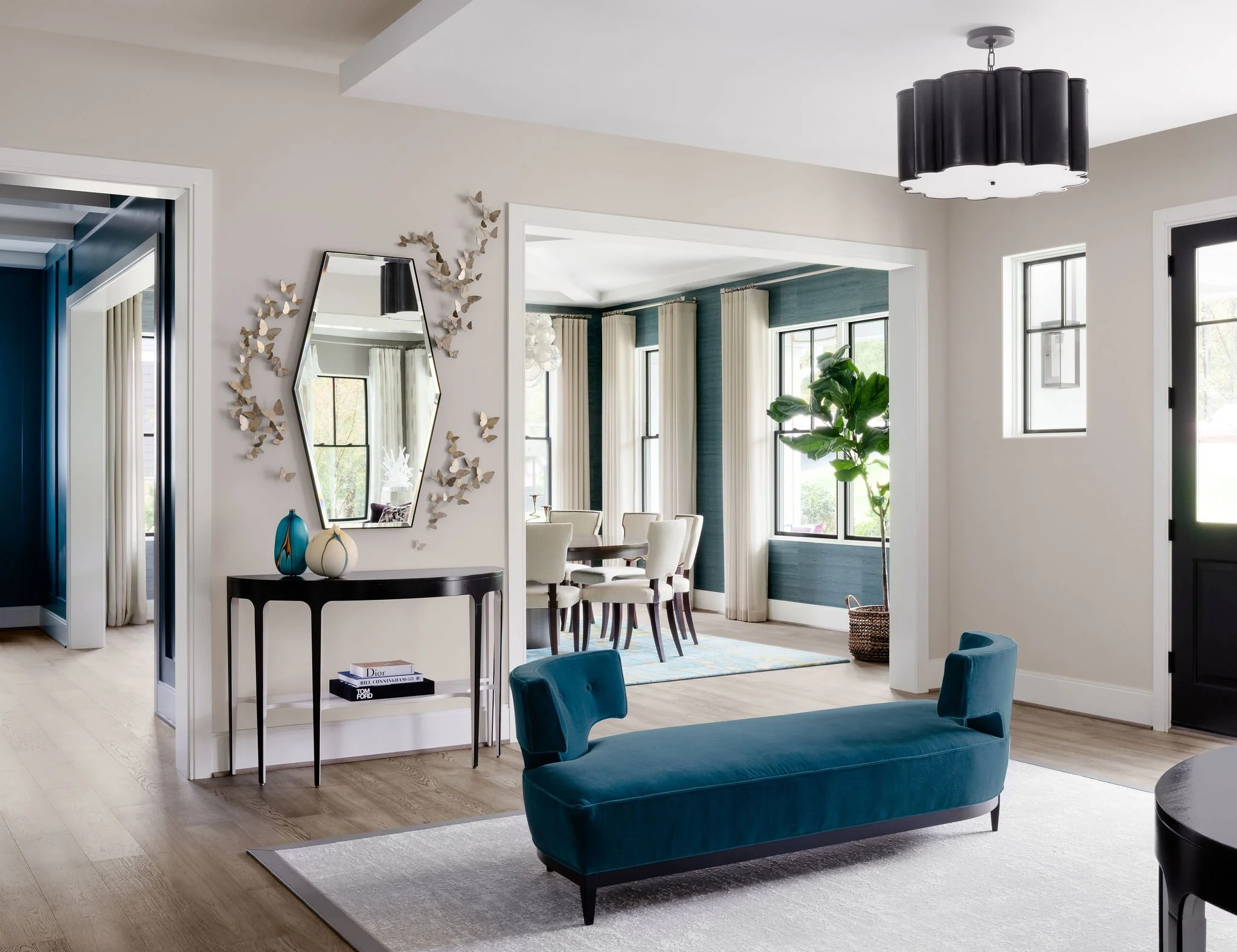
An elegant settee stands out in this spacious foyer, with plenty of breathing space on all sides.
Photo credit: Robert Radifera for Stylish Productions
When you factor these ideas into the design process, you experience a room at a more natural, rhythmic pace, just like the cycle of inhalation and exhalation in yoga. In yoga, pranayama, or breath control, is key to creating flow during our practice.
Our breath controls the rhythm of our transitions and how we move from pose to pose. This “flow” allows space both physically and mentally, and helps to regulate our energy while at the same time calming the mind. On that note, let’s take a deep breath and next move into our next principle, “focal points.”
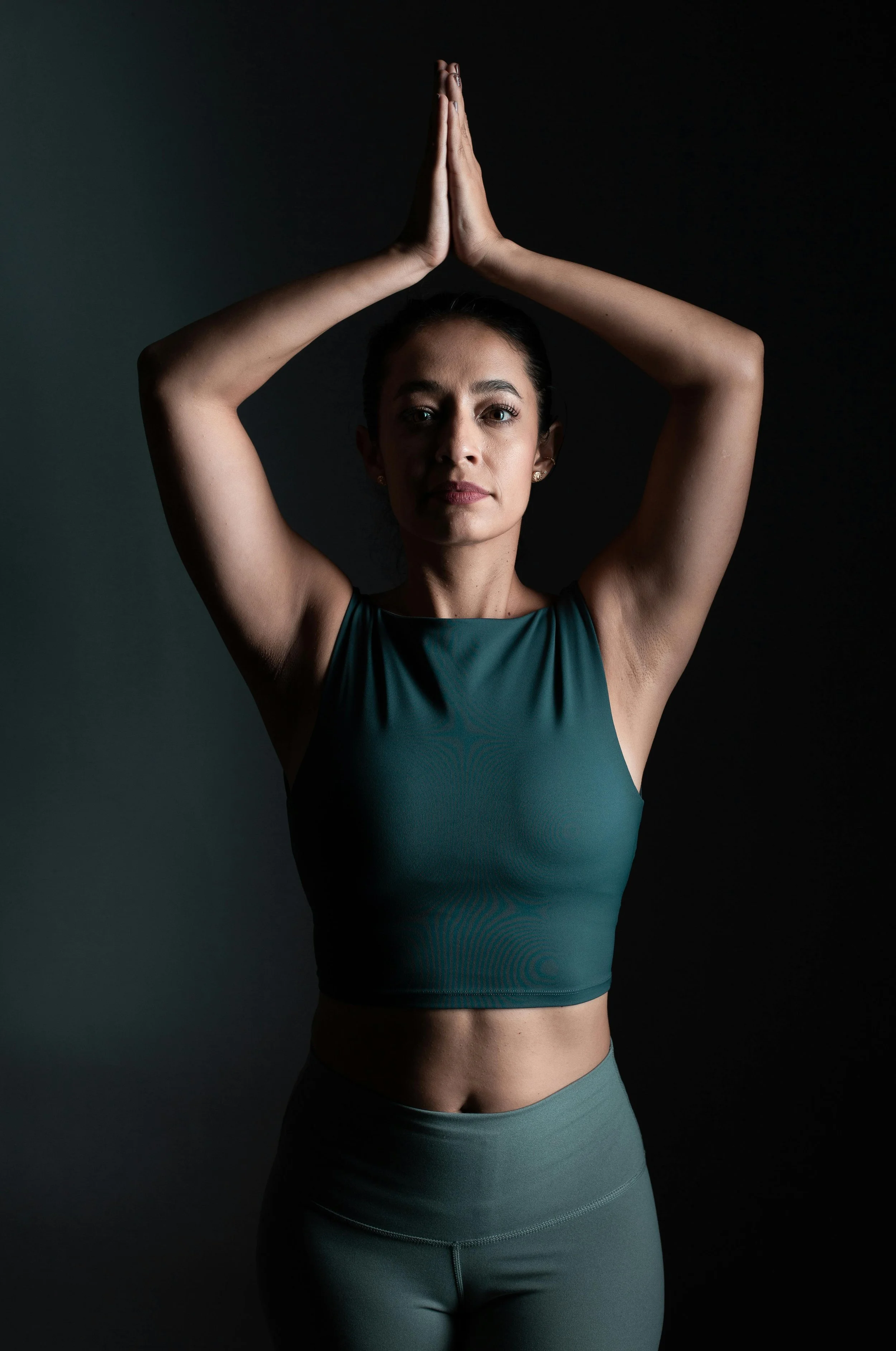
A “focused gaze” or “drishti” in yoga helps to maintain balance and intention.
Photo credit: Noemí Jiménez for Pexels
Focal Points
During yoga, I often gently focus my gaze on a particular element in the room. This “focused gaze” is known as drishti, and the intense concentration that comes with it is dharana. Both are key to maintaining balance and intention during a yoga posture.
For me, this is like a mini-meditation. It’s a moment where everything is simplified, distractions fade, and my intention comes into focus.
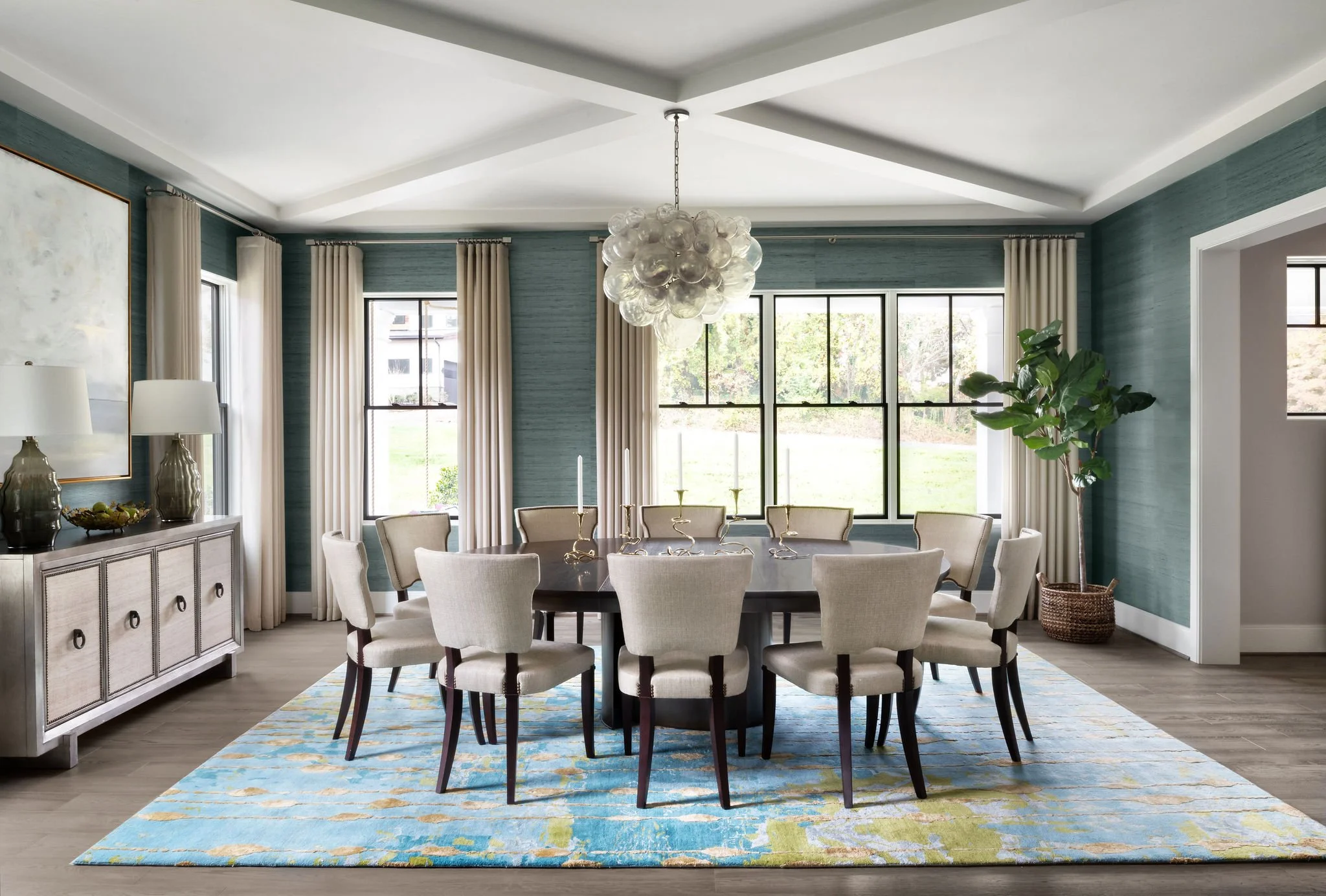
“Drishti” comes to the dining area. The beautiful center light fixture from Oly Studio anchors the space and draws the eye to focus on the room’s central purpose, a welcoming gathering space for special meals with friends and family.
Photo credit: Robert Radifera for Stylish Productions
In design, focal points serve the same purpose. They are the “drishti” of a room. They can be natural, like a beautiful picture window with a view of a majestic oak tree just outside, or curated, like a crown-like golden light fixture, a piece of fine art, or a stately stone fireplace. By creating and highlighting these focal points instead of blocking or hiding them, we naturally define the purpose and mood of the space.
“…Variations in color, contrast, and placement tend to stand out and attract our attention….This is worth remembering when you are planning designs and want a particular focal point to draw attention…”
— The Interior Design Handbook
Rooms can have more than one focal point, and there is more than one way to make this area stand out, but it’s important to be selective, or you risk overwhelming your senses. When you limit the focal points, you create these purposeful “moments,” just like in yoga, where the intention of the room becomes crystal clear.
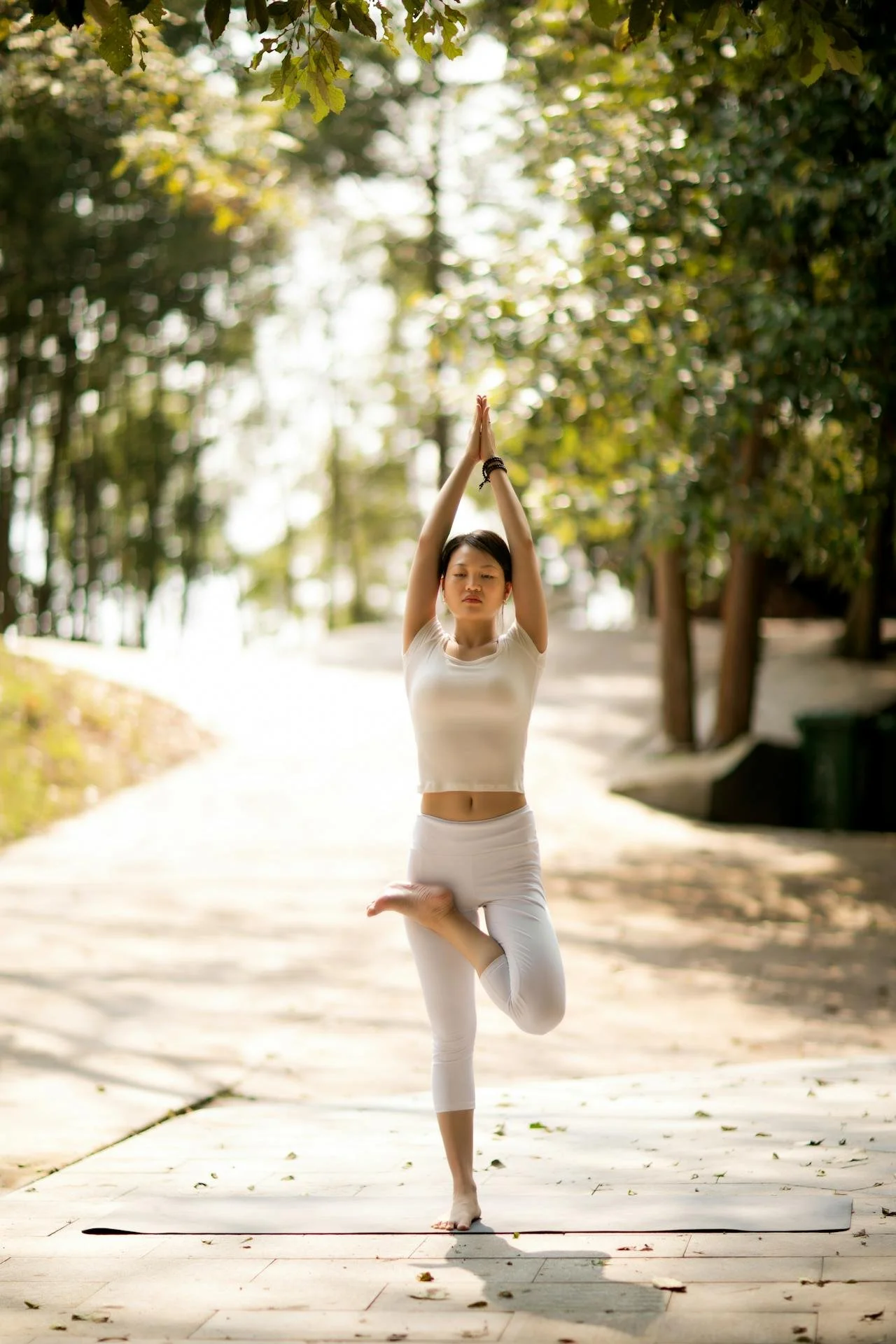
“Tree pose” is a classic yoga pose that emphasizes balance.
Photo credit: Ray Lei for Pexels
Balance
Balance and counterbalance are a central piece of the interior design and yoga puzzles. When designing a space I am always weighing the “visual gravity” of each piece in the room. This factors into how we create balance.
A designer plays with balance to create peacefulness (via equilibrium) or excitement (via disequilibrium).
— New York School of Design
In design, balance isn’t about weight, it’s about what attracts the eye. It can be symmetrical (elements mirrored against one another on either side of a central axis), asymmetrical (different objects with similar visual weight balance each other out) or radial (elements radiate from a central focal point).
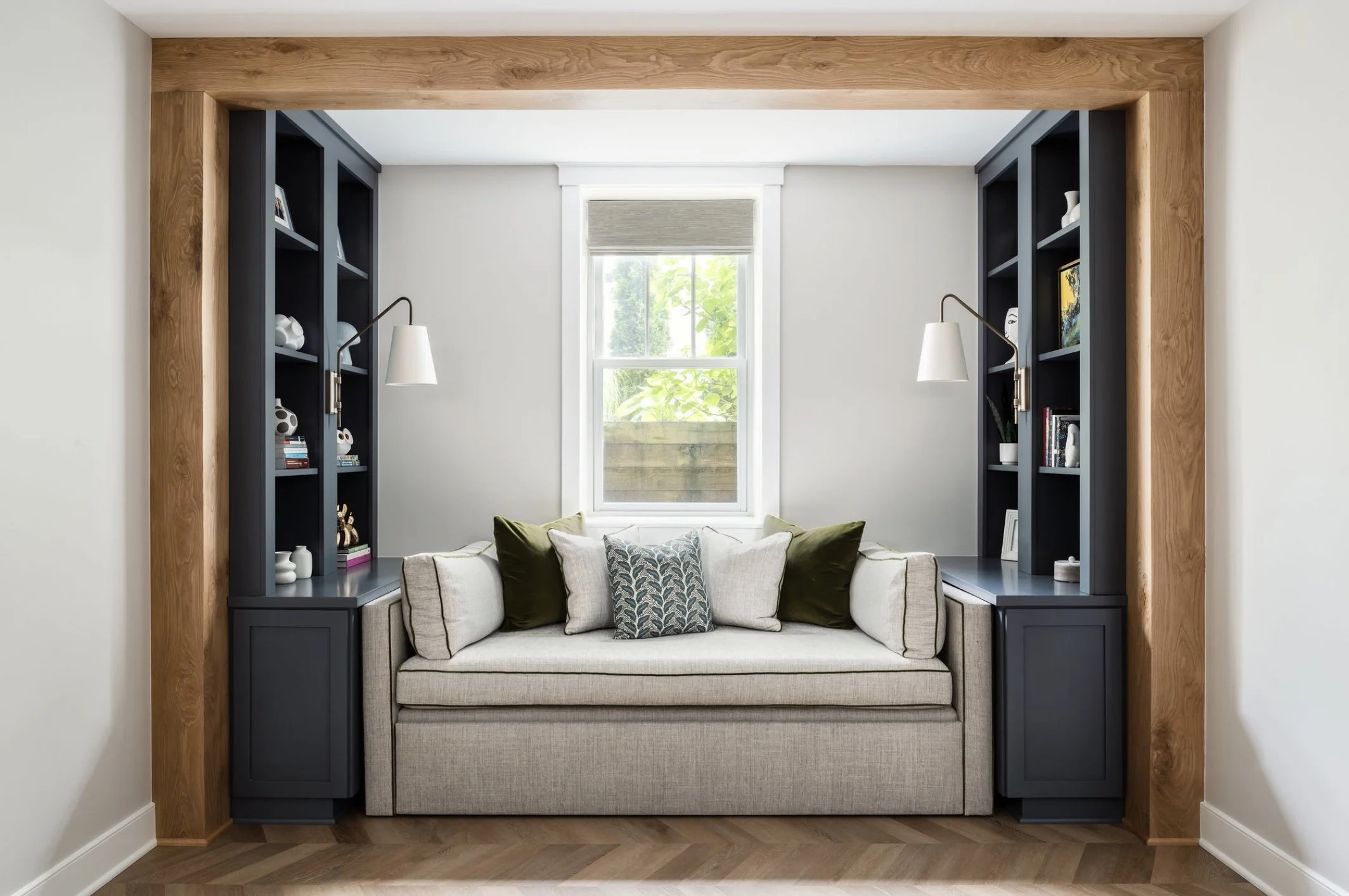
For this basement remodel project, we created a quiet zone for sleepovers and other activities. Oak beams and mirrored symmetry (symmetrical balance) help to add warmth and a more formal, calming environment.
Photo credit: Robert Radifera for Stylish Productions
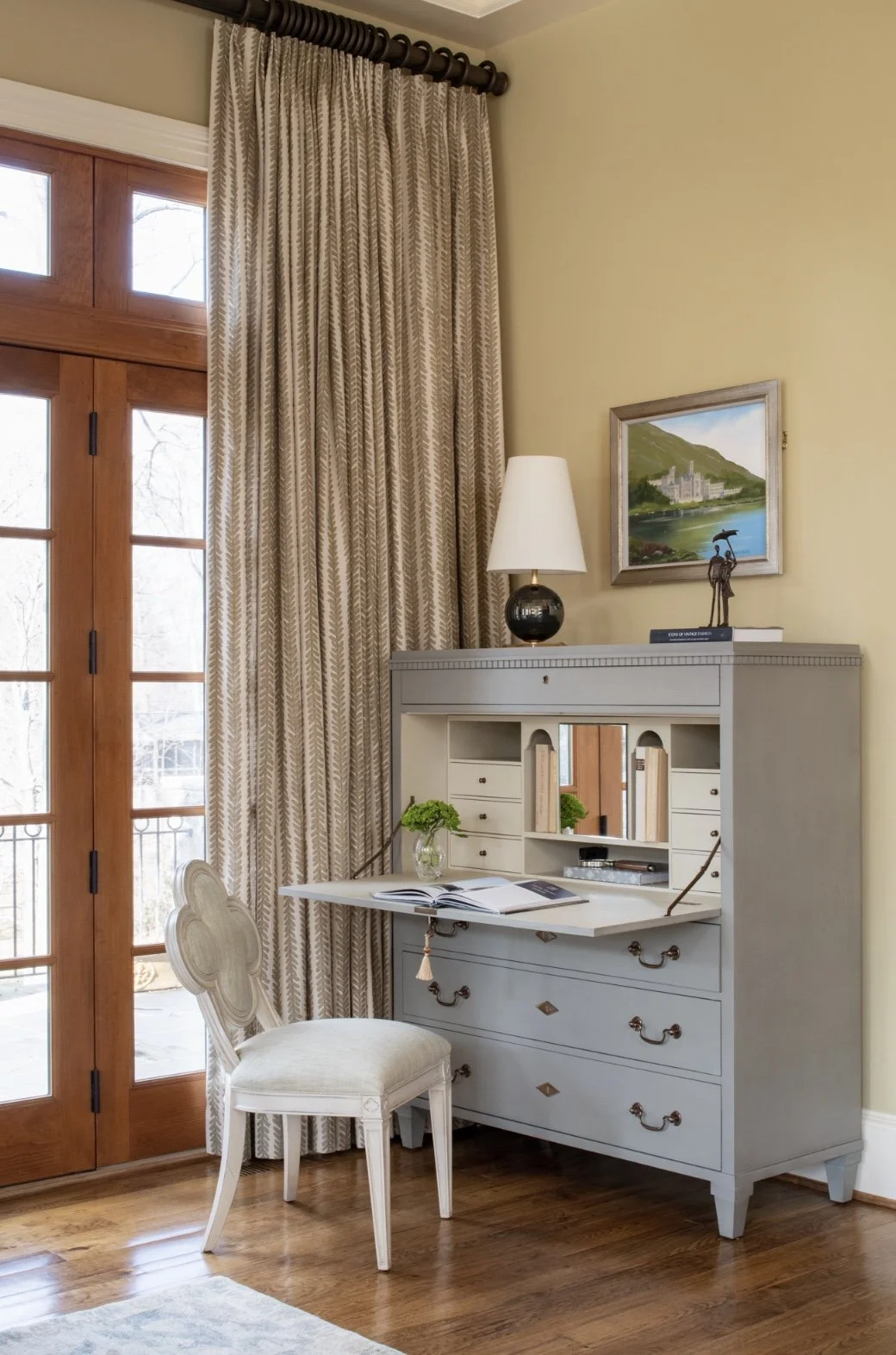
This lamp, artwork and books on display above this beautiful secretary desk show asymmetrical balance and create a point of curiosity and energy.
Photo credit: Robert Radifera for Stylish Productions
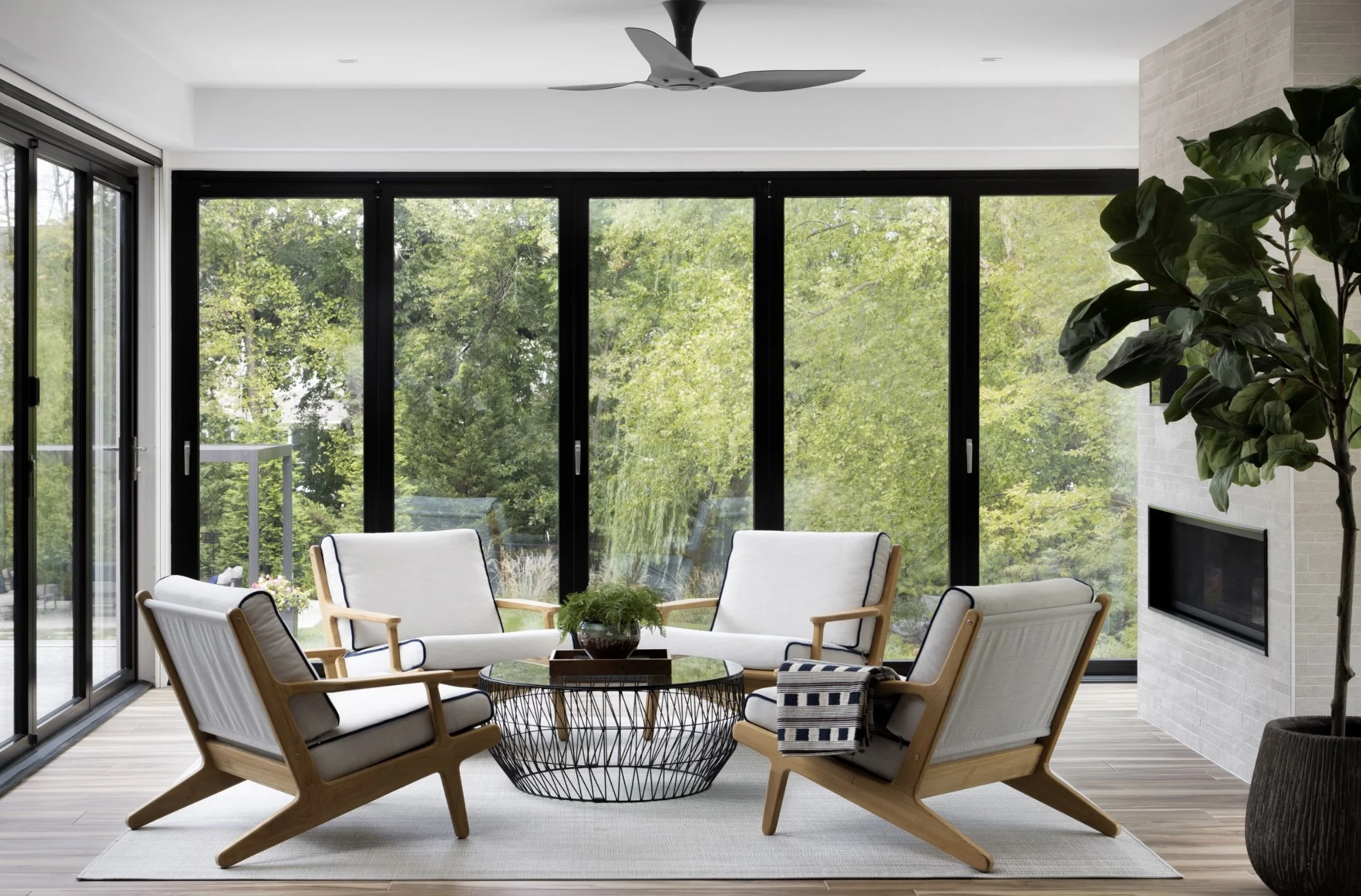
This sunroom with teak lounge chairs shows radial symmetry and draws the eyes to the center of the room.
Photo credit: Jenn Verrier Photography
Just as these design styles anchor a room, balance in yoga anchors the body. It keeps us physically stable and mentally present, ensuring we don't over-extend one side of our body at the expense of the other.
When using counterbalance in design, we also consider these “visual weight” elements to create visual tension and therefore interest: color (e.g. bold vs. soft), texture (e.g. nubby wool vs. polished metal), material (e.g. solid like wood vs. clear like glass), and scale (e.g. large vs. small) at each end of the spectrum to find that sweet spot where a room visually feels "right." For example, I might juxtapose a visually "heavy" feature—like a bold, indigo-blue velvet sofa—with something visually lighter, like an airy glass coffee table or a delicate floor lamp.
In yoga, we do the same with our bodies. We counterbalance a deep, opening stretch with the opposite - a strengthening pose. This helps to ensure we stay stable, injury-free, and centered in our practice.
Ultimately, whether through mirror-like symmetry or thoughtfully curated asymmetry, balance is the "visual exhale" of a home. It allows the eye to travel through a room without feeling pulled too hard in any one direction.
I hope this journey into my passion for yoga and four of the most important interior design elements and principles has further inspired your love for creating beautiful spaces, and perhaps even tempted you to try a centering tree pose today!
Stay tuned, I’ll continue on this thread in our next “Design Sparks: Notes from Casa Millie” newsletter by sharing my top 10 tips for grounding your home and starting the year on the right (balanced!) foot.
(To sign up for our Design Sparks: Notes from Casa Millie monthly newsletter, just scroll to newsletter sign up at the bottom of this page and add your email address.)
Feeling ready to explore new design opportunities in your home? We are only a phone call away and look forward to hearing from you!
Until next time!