A New Build Case Study: Blending Modern Organic Design with Eastern Influences
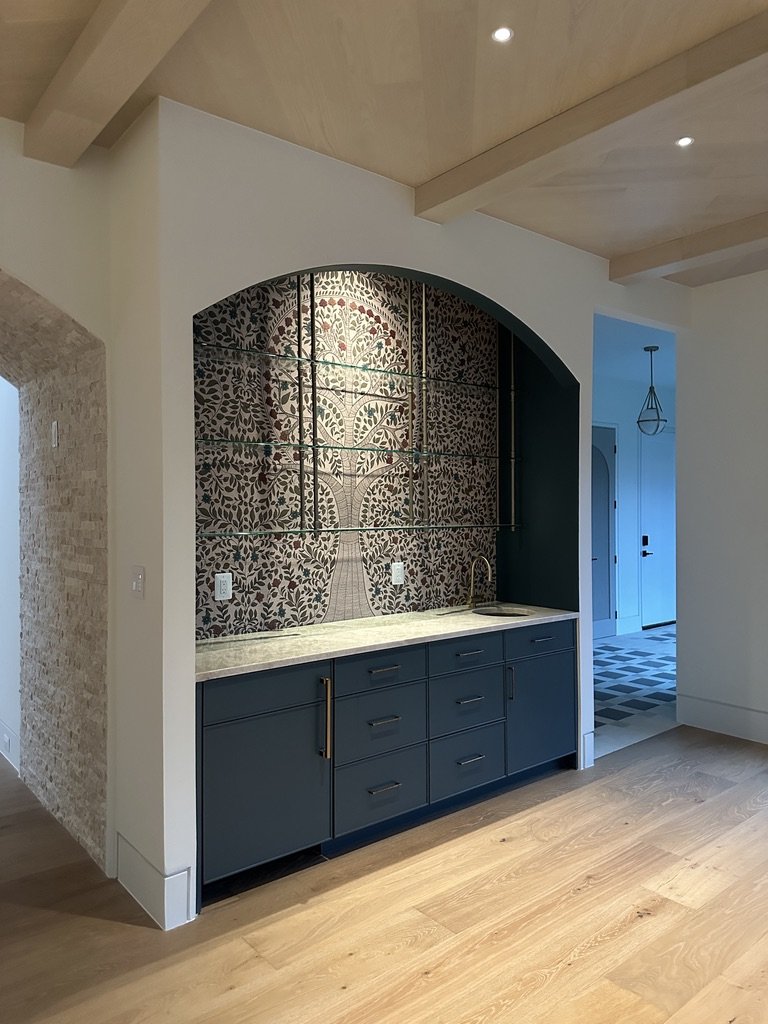
In the bar area off the kitchen and living areas, traditional Madhubani-art style “Anant” wallpaper is featured with a centrally-located sacred “tree of life.” Anant means endless growth, stability, and the interconnectedness of all life forms.
Summary
This Vienna, Virginia, new build blends modern organic design with quietly layered Eastern influences inspired by our clients’ Indian heritage. By utilizing a variety of approaches, such as hand-applied plaster, arched architectural motifs, traditional wallpapers, and custom Indian 'jali' doors, we collaborated to create a warm, culturally-relevant home that feels authentic, welcoming and timeless.
The approach to this new build was modern organic with an Eastern influence given our clients’ family roots in India. Modern organic style blends modern architecture and design with natural and organic materials to create soulful interiors that are deeply approachable, warm and welcoming.
“If Frank Lloyd Wright and Janis Joplin had a baby, it would have been the organic modern style.”
— Stephanie Thornton Plymale, CEO of Heritage School of Interior Design
Note: The pictures I’m sharing with you are from a few days before the family moved in and added more of their personal items ranging from furniture to mirrors. You’re seeing the home, as part of this case study, in its simplest but still very beautiful form. I hope you enjoy the insights!
How Modern Organic and Eastern Design Influenced this Vienna New Build
One of the most inspiring parts of this project was the opportunity to explore color, pattern, and texture from a new perspective. Our clients were committed to incorporating design elements that spoke to their culture and heritage. They also had a sense of the color palette (earthy tones primarily) and feel (soft, organic) that they wanted to have in their light-filled home.
This cultural heritage plus modern organic design approach includes the use of natural materials like stone, carved woods, plaster, paper, rattan, and earthen tiles as well as rounded, geometric, botanical and skyward-looking shapes.
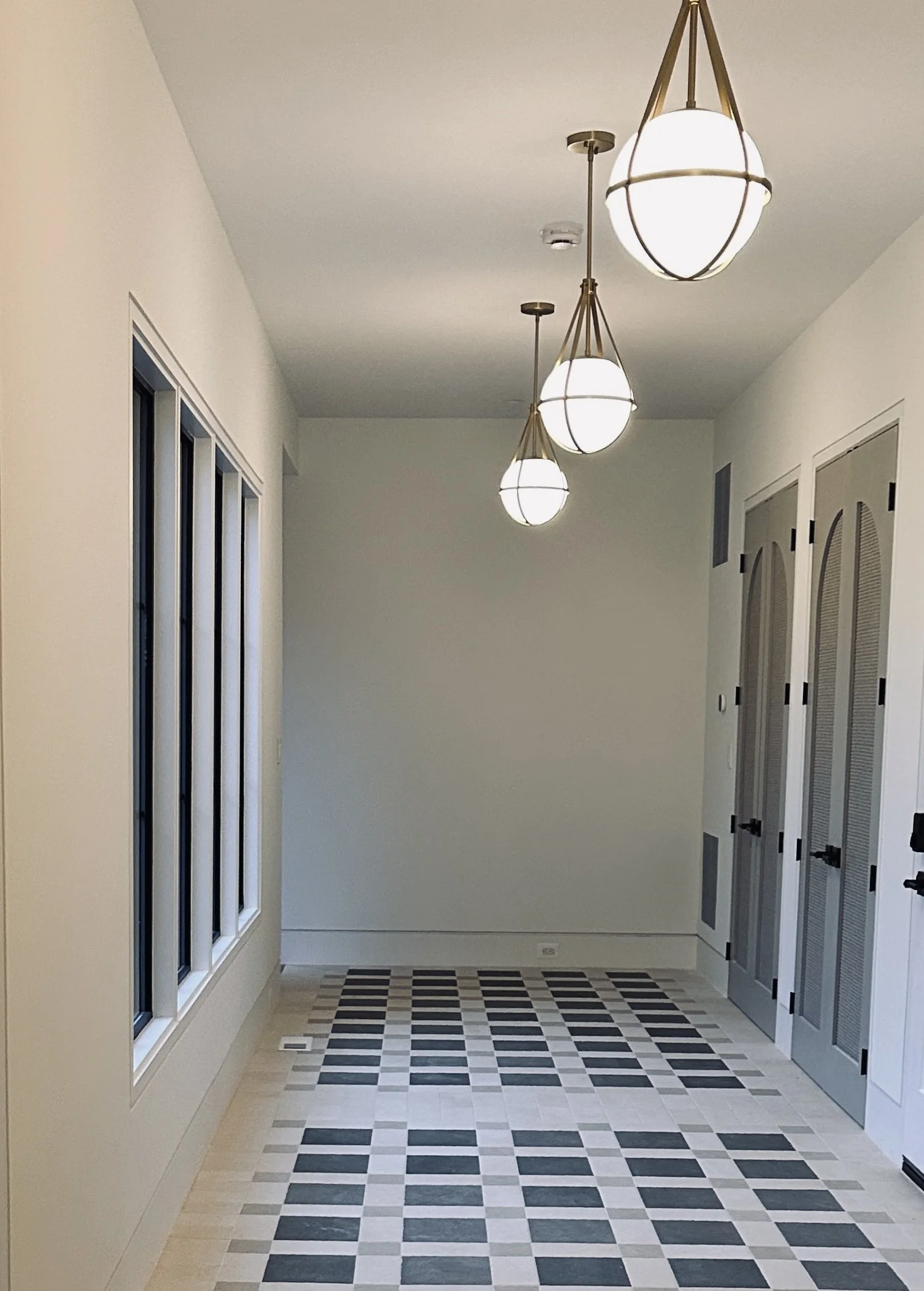
Light fixtures dangle like elegant earrings above the mudroom hallway.
For example, light fixtures had curved and often delicate jewelry-like forms, tiles included geometric shapes or patterns also reminiscent of Indian jewelry, dramatic arches were around every corner, and carved panels used for centuries in Eastern design were incorporated to add texture and subtly elevate areas.
A walk through the home’s dramatic Diana Royal marble archway that separates the heart of the home from the entryway.
Statement Making Entrances: Handcrafted Installations
Entryways to the home, including from the mudroom area, are eye-catching. The main entryway features a stone archway made of Diana Royal marble. The chiseled finish adds a rugged, hand-hewn element that compliments the home’s more polished surfaces, like the beautifully earthy Taj Mahal quartz countertops found throughout the kitchen and bar areas around the corner.
The archway grounds the entryway with an “Old World” feeling and a sense of permanence. Arches are also a very typical element in Indian architecture. Historically they are vital in temples, palaces and forts, which have also stood the test of time.
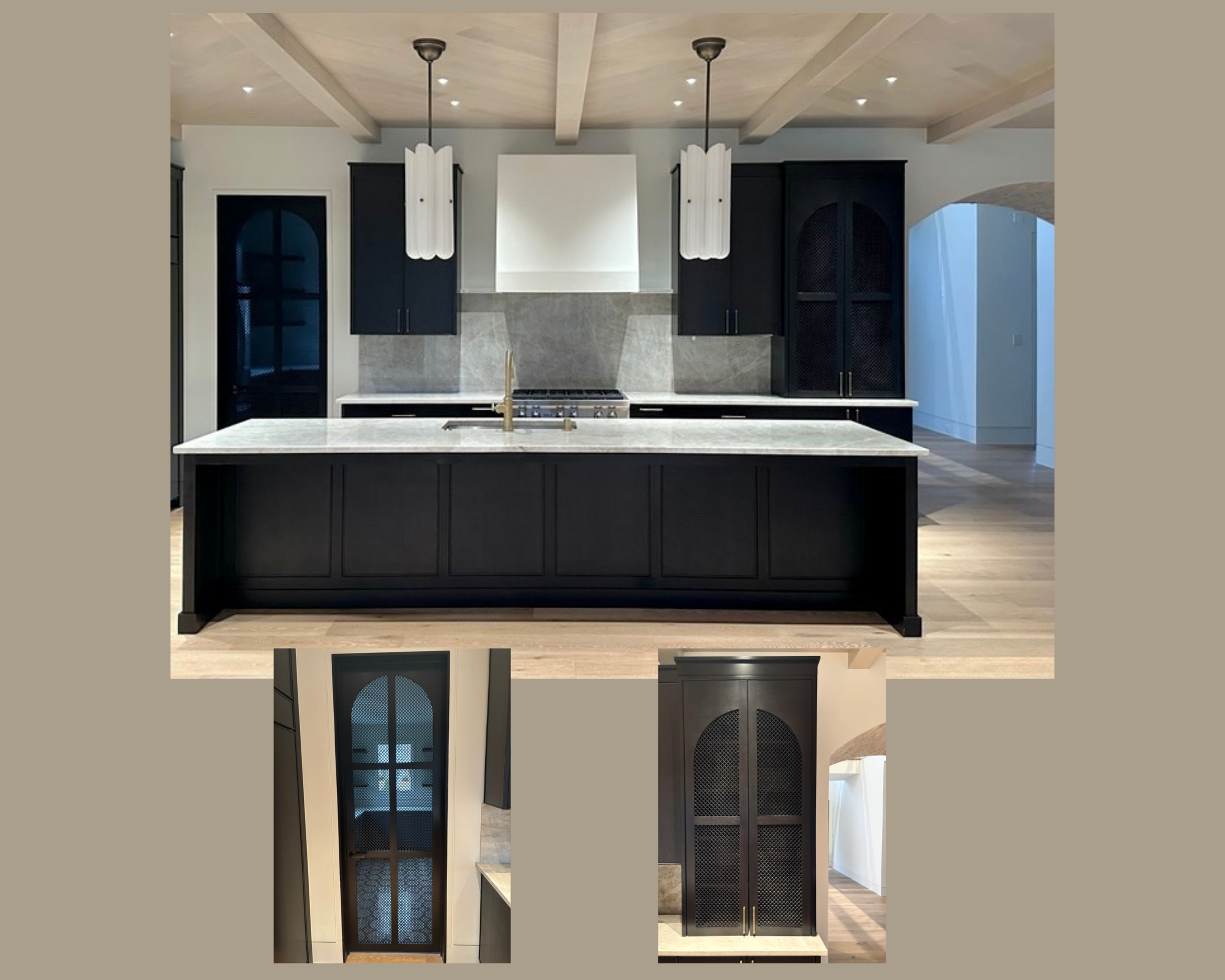
Arched doorways and cabinets were used in the kitchen area, too.
The Heart of the Home: A Study in Arched Symmetry
Our clients considered the kitchen the heart of the home and one of the most important gathering spaces and priorities for this project.
The Challenge: The inspiration home had two beautiful louvered, arched doorways around the central range. Our clients loved this look, but spatial constraints in this new home and our desire not to copy a design meant that we needed to come up with something that would echo the feel of the space that our clients had fallen in love with.
The Solution: We considered the couple’s primary needs and the layout planned for the kitchen, including a scullery entrance and cabinetry flanking the central range. In reviewing these elements - a scullery door and cabinetry - we realized there was an opportunity to create the same feel as that found in the inspiration home
The louvered doors were beautiful, but I wanted something that brought the clients’ heritage to mind. While researching potential solutions I discovered India’s beloved “jali doors.” Jali has been a part of Indian architecture since ancient times. These traditional latticed screens often incorporate geometric or floral patterns.
I used this delicate, Eastern design solution for the arched scullery door to the left of the central cooktop, as well as for the arched appliance cabinet doors to the right. This approach allowed us to successfully echo this dual archway effect from the inspiration home.
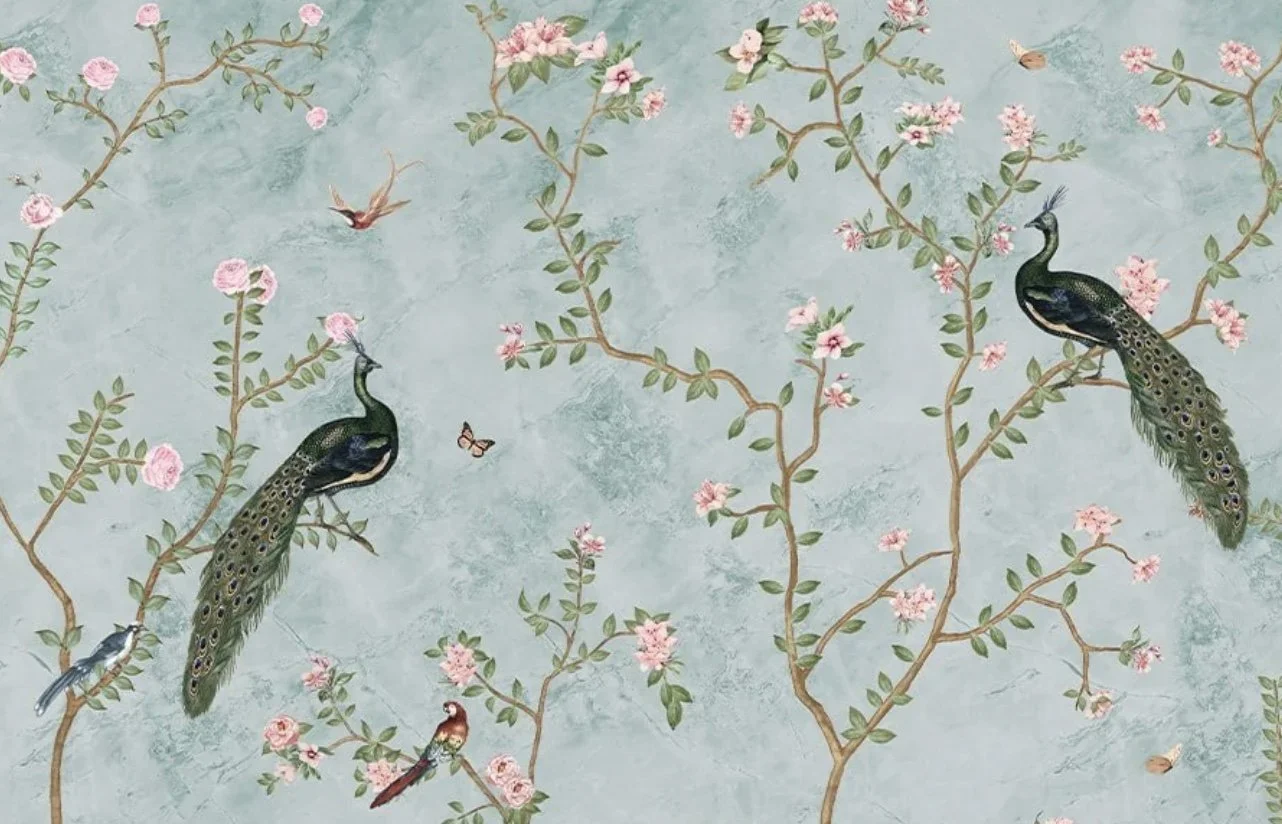
Peacock chinoiserie wallpaper is just one of many traditional Indian elements incorporated into this new home build.
Photo credit: Life n Colors
Botanical Touches: Richly Detailed Traditional Wallpapers
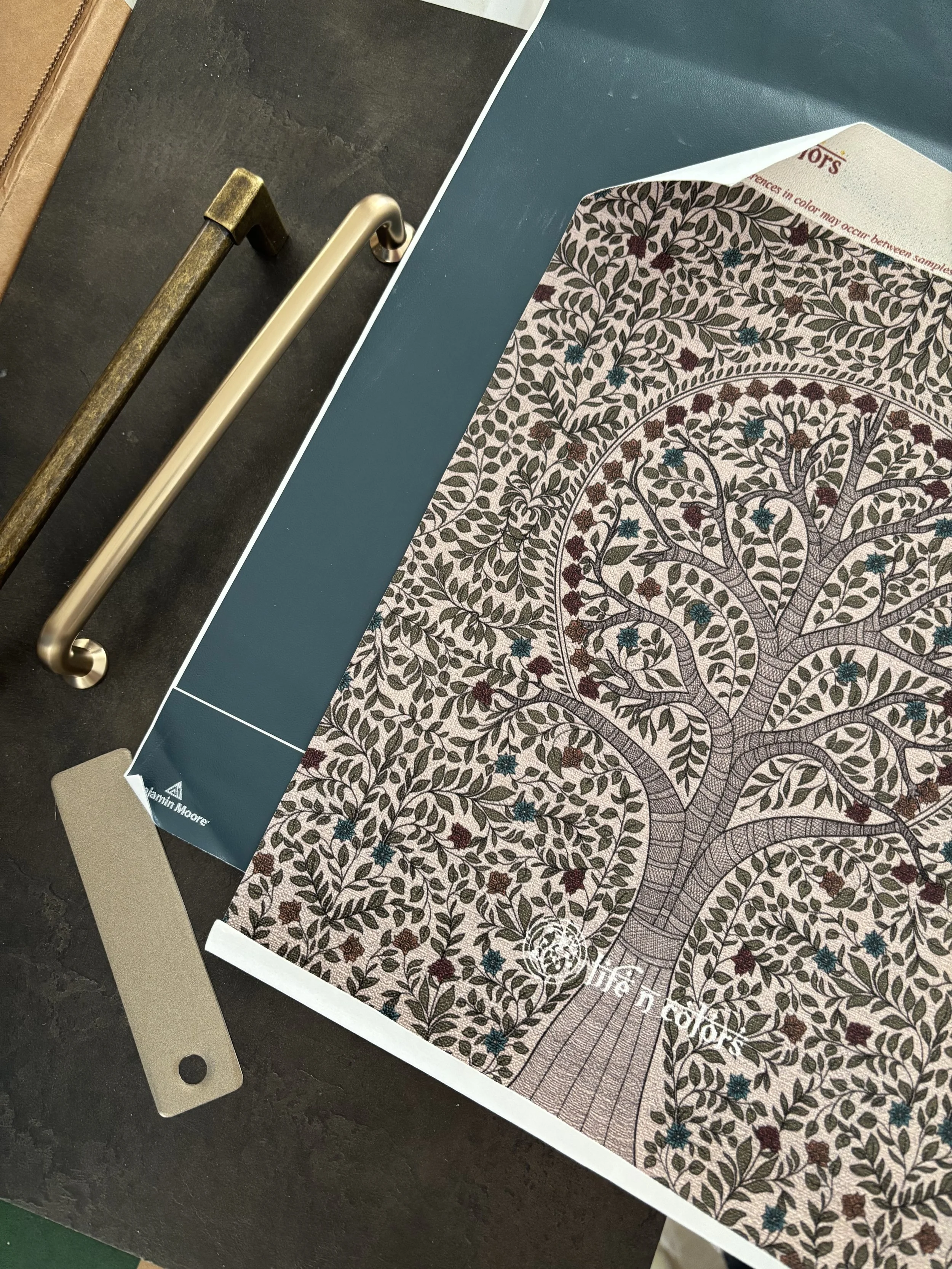
Testing brass drawer pull selections against other elements, like the Madhubani-art style wallpaper.
The owners brought plenty of ideas and inspiration to the project, including traditional wallpaper.
The traditional Madhubani-art style wallpaper in the bar area with its warm color palette is a folk art style traditional to India. The wallpaper’s rich patterns, often geometrical or botanical, are eye-catching. We spent a good amount of time ensuring that the wallpaper's central “tree of life” was large enough to make a distinct impression, but not overwhelm. (You can read more about this style here.)
Around the corner, the powder room features peacock chinoiserie wallpaper that the client had found. Peacocks perch majestically on delicate branches and tiny exotic birds, butterflies and flowers dance around them. If you can believe it, we were short on birds and butterflies, and ended up suggesting a few more placements, and the supplier was happy to accommodate our request! (You can learn more about chinoiserie and how it became a part of Indian style and decor here.)
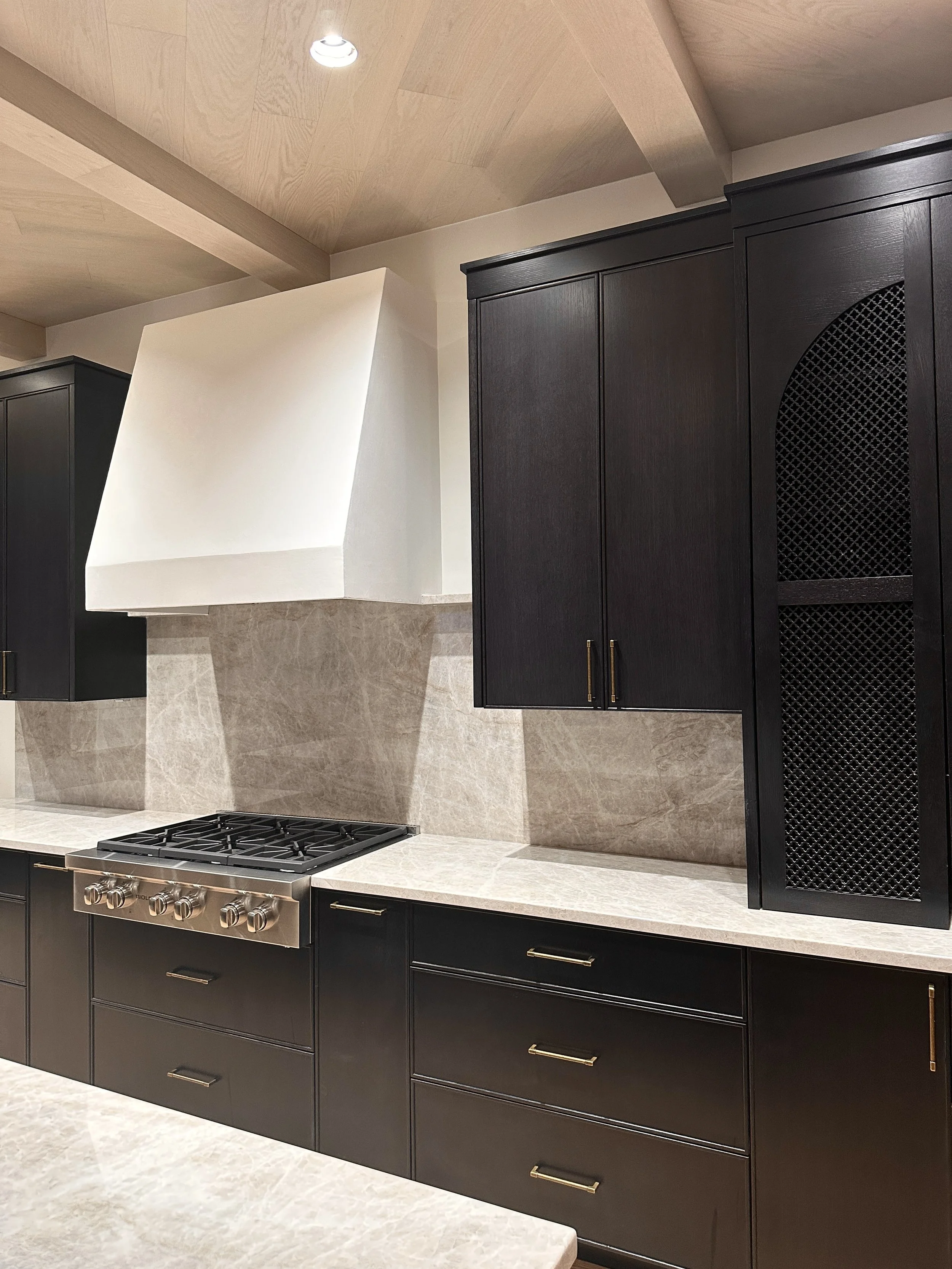
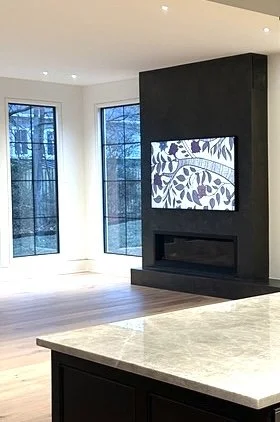
(Above) The richly textured hand-applied Italian plaster on the hood above the kitchen range provides a striking contrast to the dark, surrounding wood cabinets and the smooth Taj Mahal quartz countertops. (Below) The earthy plaster was also added to the fireplace and balances the sunlight and lighter paint and wood floors.
The Modern Organic Foundation: Hand-Applied Plaster
To contrast some of the harder elements in the home like wood and stone, we added hand-applied plaster to a few key spaces. The expansive living room fireplace off of the kitchen and the hood above the central range were both coated by local artisans in this hand-applied Italian plaster to add a warmer texture and depth to the area.
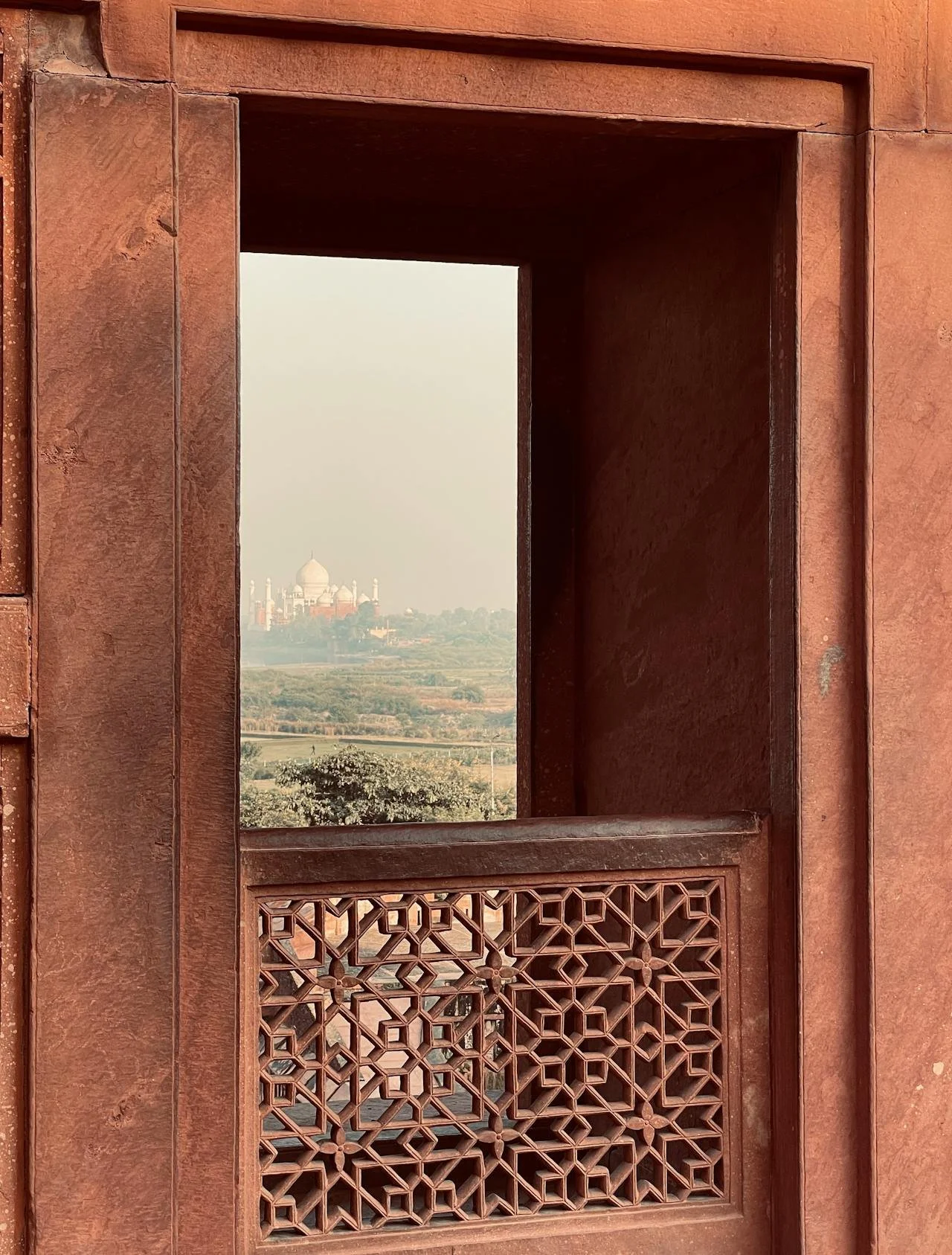
Jali design in the foreground, the famous Taj Mahal in the background, with both central to Indian culture, art, and pride.
Photo credit: Shafique Ahmad for Pexels
Architectural Texture: Jali Doors and Caning
Texture and traditional craftsmanship are layered throughout this new build, and this includes elements like the jali (pierced screens like those we mentioned in the kitchen) doors to caning (woven rattan), which also have deep roots in Eastern design.
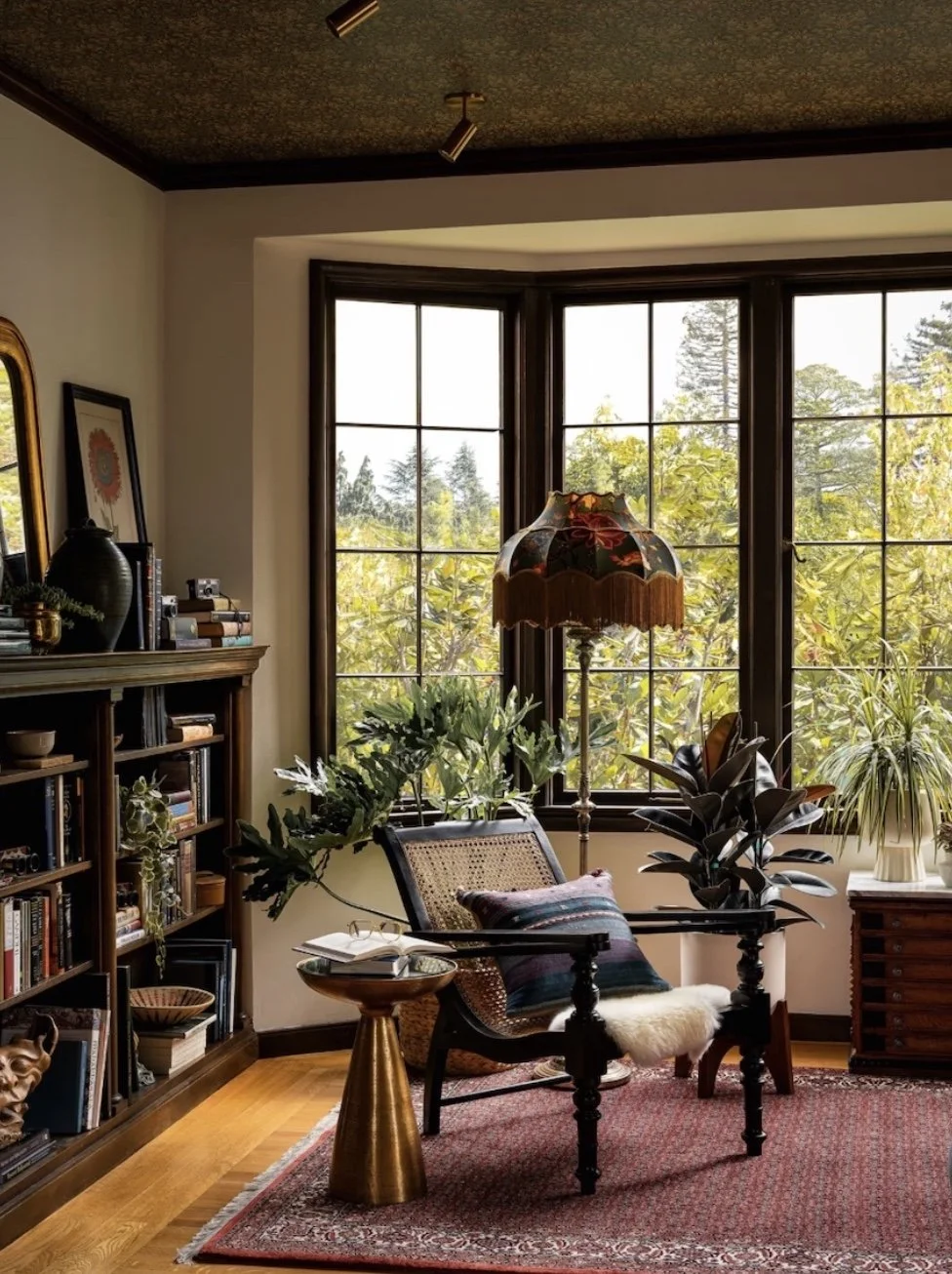
A British Colonial “plantation style” chair with breathable caning rests in the center of this tranquil space.
Photo courtesy of Architectural Digest India
Lightweight and breathable caning was favored during the Colonial era in India and has continued since then. Jali has been around for 1000 plus years, but similarly supports climate control. It also filters light beautifully and is traditionally used for privacy.
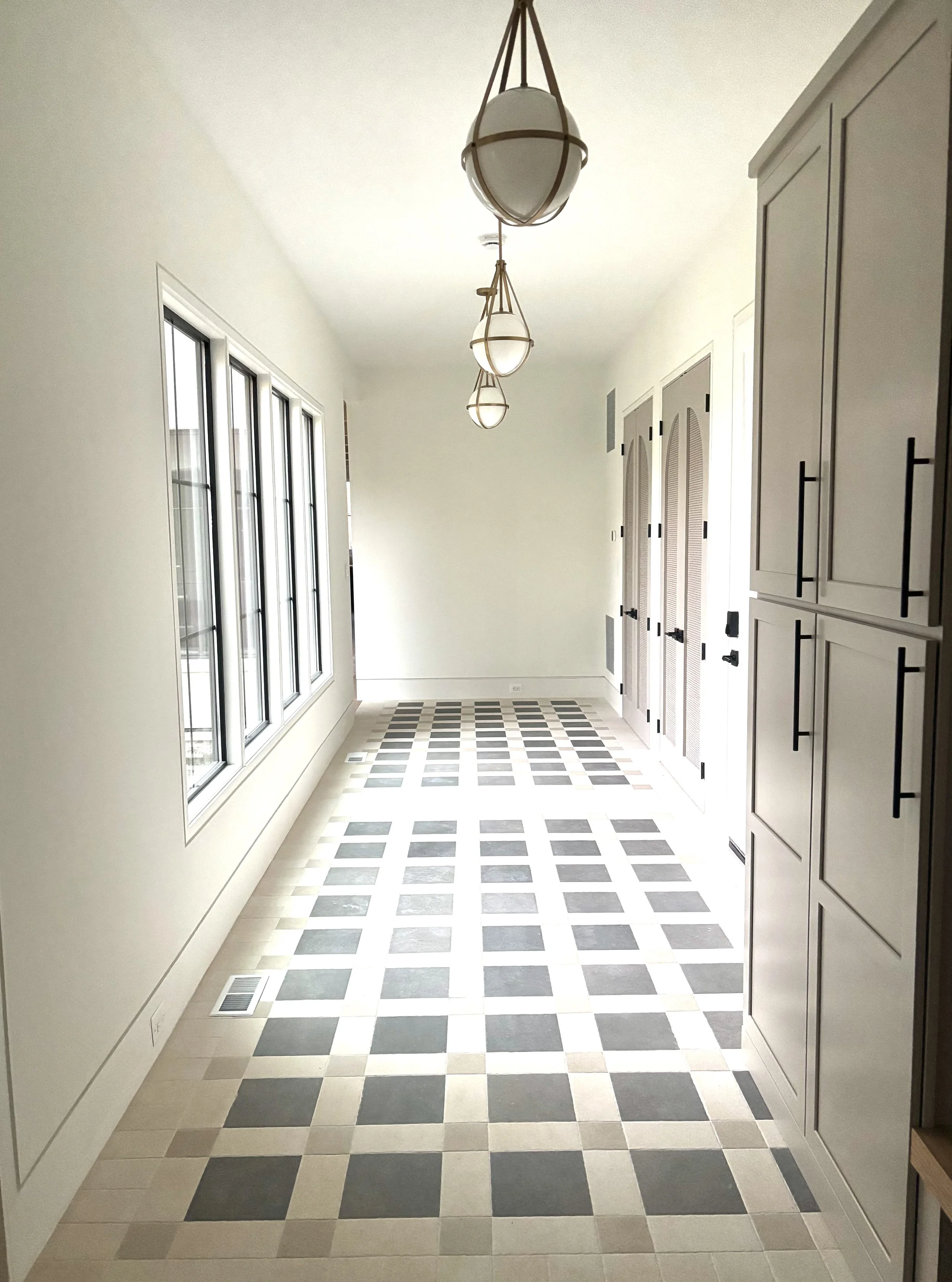
Arched custom interior doors with caning add an understated touch of Eastern influence to this mudroom hallway.
In the mudroom we included custom-made interior doors featuring inset caning. Caning works well for a modern organic design approach and helps to add cultural context to transitional spaces.
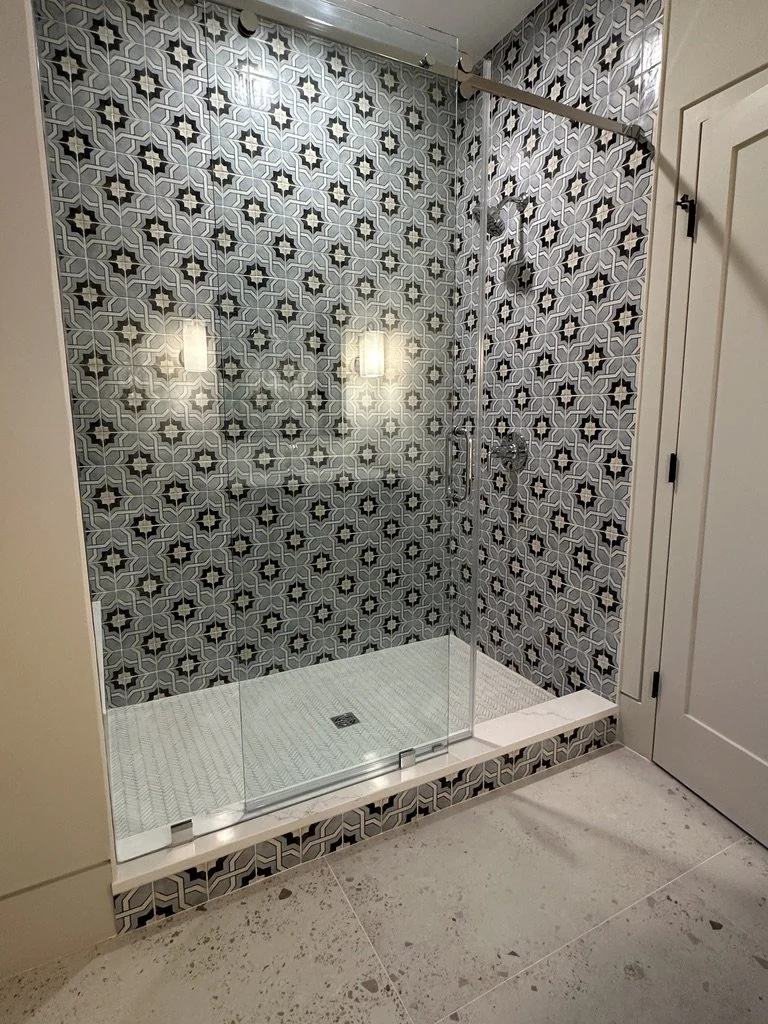
Star motif wall tiles reach to the ceiling.
Tile that Grounds You, Tiles that Tell a Story
Tiles were also a highlight in this project. The main level guest bath has a star-patterned tile, another popular shape in Eastern-influenced design.
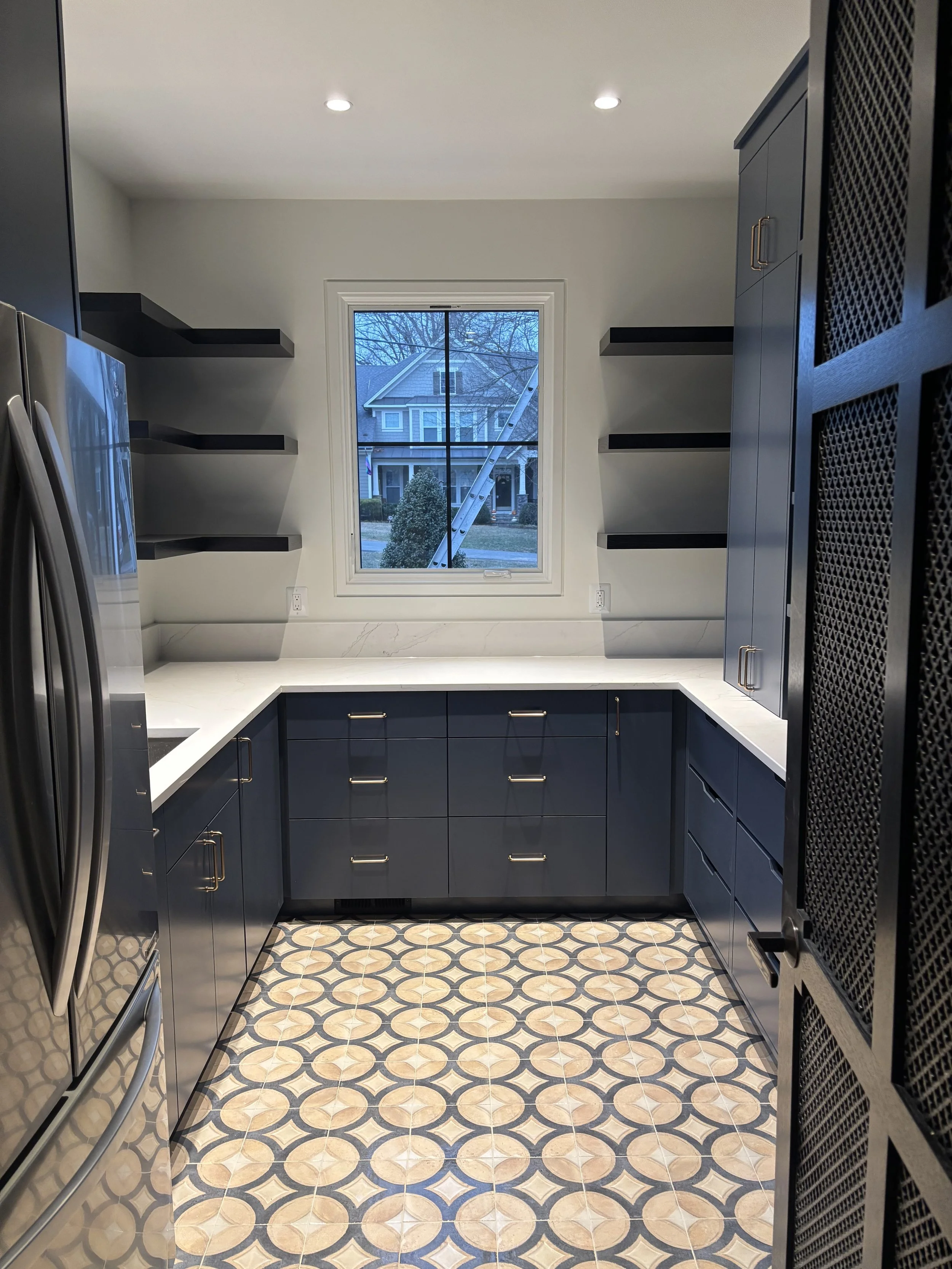
The scullery, just off the kitchen, hidden behind the arched jali-style door.
Just beyond the arched jali kitchen door, we step across earthy terracotta-colored tile and are surrounded by rich, blue cabinets that pick up some of the accent tone in the tile to add visual interest.
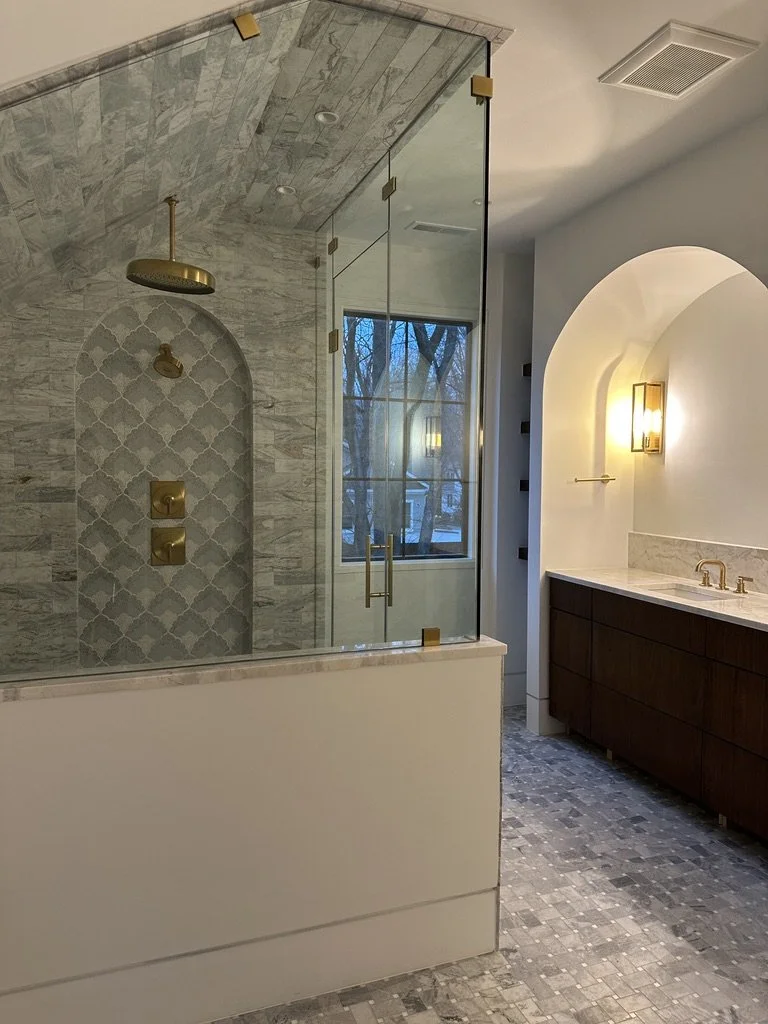
(Above and below) The primary bath, with delicate arches, rich woods, marble, and the crown jewel: the “Chandbali earing-like” tile shower centerpiece.
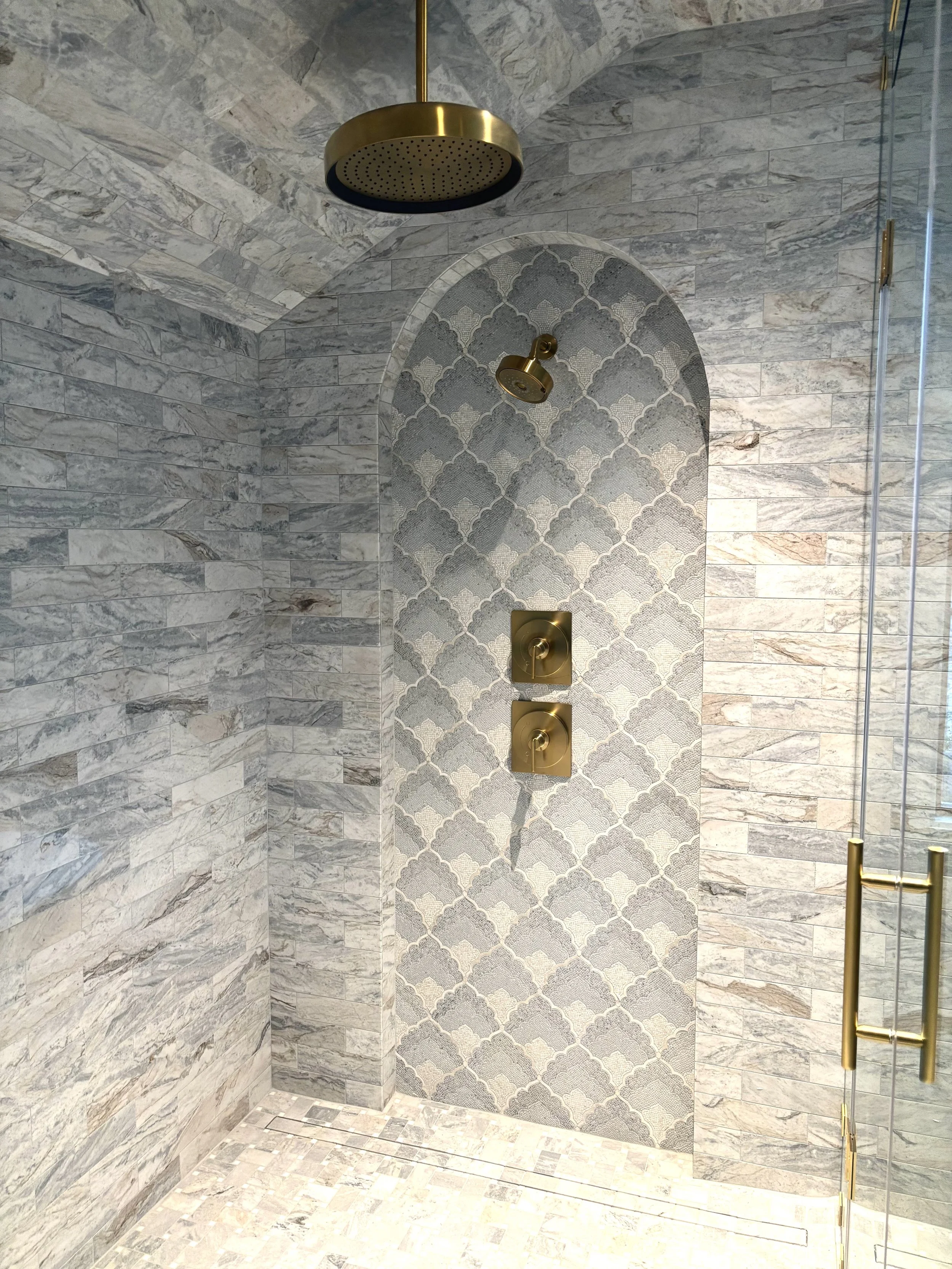
The shower tile in the primary bath is reminiscent of elegant “Chandbali earrings.” Chandbali is a Hindi word that translates to "moon earrings.” This celestial crescent shape inspired the primary bath tile used in the shower centerpiece. The client fell in love with the tile and then realized later that it reminded her of these famous earrings.
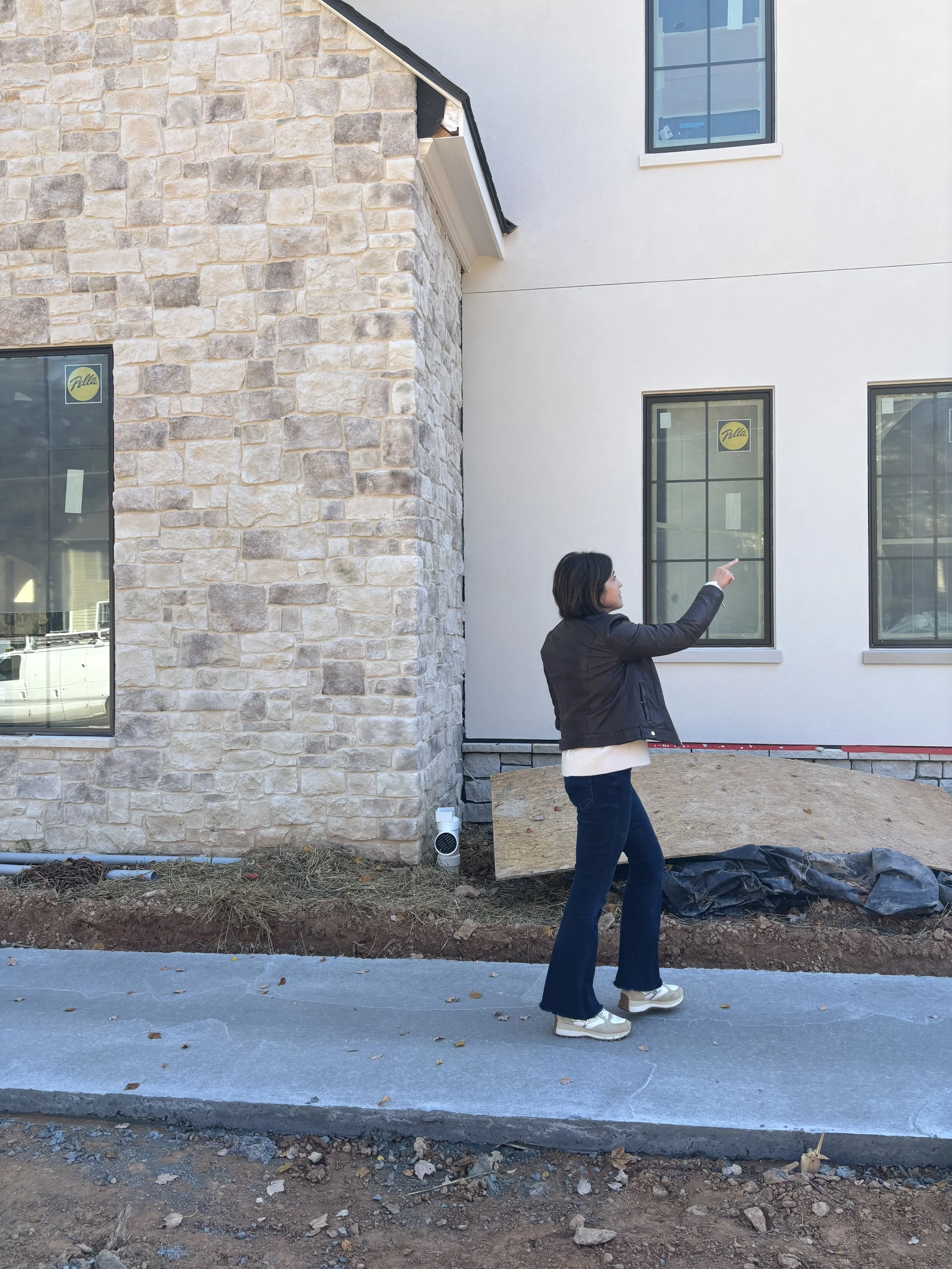
Me, getting fresh air one sunny afternoon of many, while advising on color options for the borders around the exterior windows during construction. You can see why my sneakers are a staple!
Reflecting on the Finished Product
I’m proud of how this project came together, and that we have elements that reflect our clients’ Eastern culture and heritage. We were also able to authentically and effectively tie this into a modern organic design approach. The overall effect is subtle and speaks to the client without feeling overwhelming to them or anyone who passes through this new home’s beautiful archways.
I hope this case study has further inspired you to create your own grounded, welcoming and personally-relevant spaces.
(To sign up for our also inspiring Design Sparks: Notes from Casa Millie monthly newsletter, just scroll to newsletter sign up at the bottom of this page and add your email address.)
Feeling ready to explore new design opportunities in your home? We are only a phone call away and look forward to hearing from you!
Until next time!